About 273 minutes
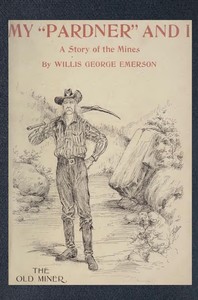
My "Pardner" and I (Gray Rocks): A Story of the Middle-West — Reading Companion
Exploration Survival Adventure Tales
62,688 recorded words. 37 minutes difference from this book's estimate.
View Gutenberg source #52458
This digital edition of The High Toby Being further chapters in the life and fortunes of Dick Ryder, otherwise Galloping Dick, sometime gentleman of the road — Edition Insights is described by source-level measurements including 71,203 words, 5 hr 10 min estimated reading time, and 7 detected text sections.
The text analysis averages about 17.6 words per sentence, while the detected sections provide another way to judge how the source is divided.
Project Gutenberg metadata also associates the work with “Adventure stories,” connecting these edition facts with the source record’s subject description.
Explore this collection
These alternatives are selected using recorded categories and estimated reading time.
About 273 minutes
Exploration Survival Adventure Tales
62,688 recorded words. 37 minutes difference from this book's estimate.
View Gutenberg source #52458About 348 minutes
Exploration Survival Adventure Tales
79,886 recorded words. 38 minutes difference from this book's estimate.
View Gutenberg source #52289About 267 minutes
Exploration Survival Adventure Tales
61,217 recorded words. 43 minutes difference from this book's estimate.
View Gutenberg source #54538Search stored excerpts and compare books → Choose by your preferences →
Choices use stored catalog measurements. Estimates vary with reading speed. A shared category is a catalog label, not a claim that two books have the same argument or literary quality.
Search reads excerpt text stored with this catalog and links to its associated Gutenberg record. The connection is stored in the site database; this tool does not recheck that every excerpt is word-for-word identical to that external record. Excerpt search does not cover every chapter and does not verify historical publication dates.
Catalog snapshot checked: 2026-09-25. Coverage: 94 public books, 94 available source excerpts.
Read the complete public-domain text at its original source.
Read on Project GutenbergThe High Toby opens with Dick Ryder's first-person declaration of independence: 'I ever had the name of one that kept to himself, nor was bedfellow to none upon the high toby.' This voice—colloquial, self-justifying, and seasoned with cant—immediately establishes a narrator who controls how his story is told. The prose moves between brisk action sequences and leisurely, almost theatrical dialogue, as when Dick impersonates a haberdasher named Samuel Hogg to negotiate for a niece. The pacing mirrors the rhythms of the road: sudden gallops of incident followed by wary pauses in inns and parlors.
Dick Ryder’s narration is the book’s central engine. He speaks in a knowing, retrospective tone, often commenting on his own past choices: 'I was once took for an affair near Petersfield, and swore not to touch that road again.' This self-awareness gives the prose a double layer—the reader watches both the action and Dick’s management of his reputation. His voice is laced with highwayman slang ('tiddlers,' 'the pad') and a wry humor that undercuts danger. When he describes a moonlit ride 'with two bottles of good wine under my jacket,' the casual detail signals a man who treats robbery as a trade. The narrative rarely steps outside Dick’s perspective, so the reader’s understanding of events is filtered through his bravado and occasional evasions.
Extended scenes of dialogue, such as the negotiation for Nancy, reveal how Dick uses language as a tool. He adopts a false identity ('Samuel Hogg, of Bristol'), spins a sentimental backstory about a dead wife and daughter, and produces a purse of gold to sway his audience. The exchange is a verbal duel: the grocer and aunt probe with questions, while Dick parries with indignation and flattery. His remark, 'Rip me, I carry not my wares to a market that fancies me not,' blends merchant metaphor with theatrical threat. These conversations slow the narrative pulse, contrasting with the swift action of the road. The dialogue also exposes the social dynamics of the period—class, suspicion, and the power of money—without explicit commentary from the narrator.
The excerpts show a deliberate alternation between outdoor action and indoor negotiation. The opening chapter, 'Under the Moon,' sets a scene of solitary travel across Witley Common, with the sky 'alight and glistening'—a moment of atmospheric calm before potential violence. In contrast, the parlor scene in 'The Draper's Niece' is cramped with multiple voices: the aunt's whine, the grocer's suspicion, the thin woman's sighs. Dick’s movements between these spaces define the book’s rhythm. He is always on the verge of departure, whether from a common or a room, and the narrative follows his restlessness. The shifts in pace—from trotting horse to tense silence—create a texture that mirrors the highwayman’s life: bursts of risk punctuated by wary stillness.
Readers attentive to narrative voice will notice how Dick’s self-presentation evolves across episodes. The excerpts suggest a protagonist who is both performer and observer, shaping his story even as he lives it. Pay attention to moments when the prose slows for dialogue or description—these are where the book’s social comedy and psychological depth emerge, not just its adventure.
I find myself returning to the night rides of Dick Ryder, that swift, roguish breathlessness, yet it is the quiet hush between adventures that lingers. That same hush seems to dwell within the pages of Tom Terror, the Outlaw — Inside the Classic, a shared stillness between the gallops, two old friends nodding across the shelf.
Build a private reading journal entry for this title.