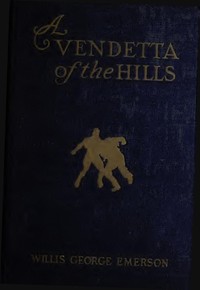
The novel begins with a broad, almost painterly description of a June morning in mid-California: the sun rising over a valley "spread out like a parchment scroll," cattle moving toward streams, and old Fort Tejon standing "dismantled now and partly in ruins." This opening suggests a story rooted in a specific, romanticized frontier landscape. Yet the title and catalog subjects—revenge, outlaws—warn that this pastoral calm will not last.
By the later excerpts, the tone has shifted entirely. Thurston, a wealthy rancher, paces a room and vows to hang Dick Willoughby for his son's death. The dialogue is blunt and violent: "I will have my revenge." A sleuth, Leach Sharkey, with a "hyena-like appearance," is hired to hunt Willoughby down. The contrast between the opening's golden valley and the later scenes of plotted vengeance is stark, and readers should watch for how the landscape itself becomes a stage for pursuit.
A Landscape That Promises, Then Withholds
The first chapter, "Guadalupe," devotes several paragraphs to a panoramic view: "encircling mountains, rolling foothills, and then the vast expanse of plain." The language is leisurely, almost idyllic. But the catalog subjects—revenge, outlaws—and the title's word "vendetta" undercut this serenity. The fort is a "romantic relic of old frontier fighting days," hinting at past violence. Readers should note how Emerson uses the setting to establish a world that feels both open and dangerous. The valley is described as a "parchment scroll," suggesting a story waiting to be written—or a territory to be claimed by force.
Voices of Wrath and Calculation
In the later excerpts, dialogue dominates. Thurston's speech is raw: "Damn all pretty faces, anyhow. First and last they have cost me a fine sum." He blames a "pretty face" for his son's death and vows to hang Willoughby "even if it is the last act of my life." Leach Sharkey replies with a "sardonic smile," his teeth giving him a "hyena-like appearance." Their exchange is transactional: Thurston threatens Sharkey's job, and Sharkey demands a check to hire more men. The language is direct, even coarse, a sharp contrast to the opening's descriptive prose. This shift in register signals a move from scene-setting to personal conflict.
Rumors, Treasure, and the White Wolf
The excerpts include references to buried treasure and an outlaw called the White Wolf. Thurston dismisses the White Wolf as "dead as a herring," claiming he "stood on his very grave in the potters’ field at Seattle." Meanwhile, storekeeper Tom Baker and Buck Ashley gossip about a missing convict, Pierre Luzon, who "robbed us of our share of the buried treasure." These details—treasure, a dead outlaw, a French convict—suggest subplots that may intersect with the main revenge story. The mention of "wireless telephone" and characters who "don’t worry" hints at secret communication. Readers should track how these threads connect to the central vendetta.
The Weight of a Canvas Sack
Near the end of the provided excerpts, Lieutenant Munson and Jack Rover enter a store carrying "a rotund canvas sack tied at the neck." The sack is "not very big, but clearly of considerable weight." This object arrives just as the sheriff and storekeeper argue about the escaped convict. The sack likely contains gold or something valuable, but the excerpts do not reveal its contents. The scene is charged: Munson is described as "in a state of visible excitement," and the storekeeper's earlier remark that Munson "wears such a spry look" suggests he knows more than he says. This moment of arrival, left unresolved in the excerpts, invites readers to wonder what the sack holds and how it will affect the pursuit of Willoughby.
As you read, pay attention to how Emerson balances the expansive California setting with the claustrophobic intensity of personal revenge. The early chapters may feel slow, but they establish the terrain that will later become a hunting ground. The dialogue in later sections is blunt and driven by threat, not reflection. Watch for the ways that objects—a canvas sack, a letter from San Quentin, a hidden cavern—carry the plot forward. The novel's title promises a feud, but the excerpts suggest that the real tension lies in who controls the story of the hills.
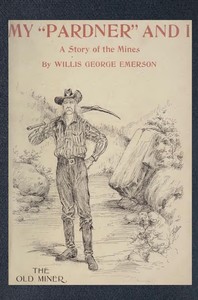
That old revenge tale, with its dusty Tehachapi trails and grudge-nursed silences, always made me think of the quieter, homelier Gray Rocks—both are haunted by the past, one through gunfire, the other through remembered friendship. They sit on my shelf like distant cousins, sharing a certain frontier loneliness. I find My "Pardner" and I (Gray Rocks): A Story of the Middle-West — Reading Companion a gentler echo of that same stern country.