About 137 minutes
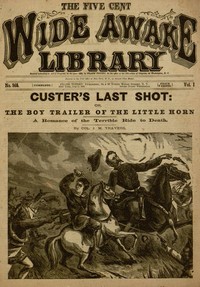
Custer's Last Shot; or, The Boy Trailer of the Little Horn — Context and Discussion
Exploration Survival Adventure Tales
31,383 recorded words. 5 minutes difference from this book's estimate.
View Gutenberg source #49286
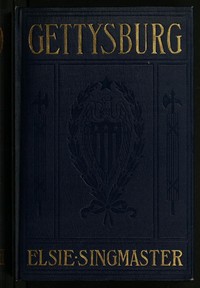
For Gettysburg: Stories of the Red Harvest and the Aftermath — Story, Setting & Ideas, the stored edition analysis reports 32,454 words, 2 hr 22 min estimated reading time, and 13 detected text sections.
The text analysis averages about 15.1 words per sentence, while the detected sections provide another way to judge how the source is divided.
Project Gutenberg metadata also associates the work with “War stories, American,” connecting these edition facts with the source record’s subject description.
Explore this collection
These alternatives are selected using recorded categories and estimated reading time.
About 137 minutes
Exploration Survival Adventure Tales
31,383 recorded words. 5 minutes difference from this book's estimate.
View Gutenberg source #49286About 125 minutes
Exploration Survival Adventure Tales
28,615 recorded words. 17 minutes difference from this book's estimate.
View Gutenberg source #49109About 170 minutes
Exploration Survival Adventure Tales
39,062 recorded words. 28 minutes difference from this book's estimate.
View Gutenberg source #50742Search stored excerpts and compare books → Choose by your preferences →
Choices use stored catalog measurements. Estimates vary with reading speed. A shared category is a catalog label, not a claim that two books have the same argument or literary quality.
Search reads excerpt text stored with this catalog and links to its associated Gutenberg record. The connection is stored in the site database; this tool does not recheck that every excerpt is word-for-word identical to that external record. Excerpt search does not cover every chapter and does not verify historical publication dates.
Catalog snapshot checked: 2026-09-25. Coverage: 94 public books, 94 available source excerpts.
Read the complete public-domain text at its original source.
Read on Project GutenbergSingmaster opens not with a battle scene but with the title 'A Battle Is to Be Fought Here,' then moves through the three July days in 'July the First' before shifting to postwar reckonings. The collection's structure—thirteen stories spanning 1863 to 1913—creates a mosaic of moments rather than a continuous narrative. Recurring images of harvest (the 'red harvest' of the subtitle) and homecoming tie the violence to the land and to domestic spaces. The author frequently uses sensory details—touch, sound, sight—to ground the reader in specific, often painful, experiences.
The stories alternate between the battlefield and the home front, often within a single piece. In 'The Home-Coming,' a soldier returns to a house marked by loss; in 'The Battle-ground,' the landscape itself becomes a character. Singmaster uses the journey—marching toward Gettysburg, retreating from it, returning years later—as a structural device. The excerpt from 'Gunner Criswell' shows a blind veteran revisiting the field, guided by a child's touch and a woman's voice. This movement is not linear: the collection jumps from 1863 to 1876 to 1913, forcing the reader to piece together the aftermath across decades.
The 'red harvest' of the subtitle appears literally in fields stained by battle and figuratively in the gathering of dead. Singmaster returns to the image of harvest throughout: crops, bodies, memories. Touch is another repeated motif—the blind man feeling a cannon, a child's shoulder against a knee, the guidance of a hand to a bread-plate. These tactile moments contrast with the abstract statistics of war (lists, pensions, monuments) that the general in 'Gunner Criswell' represents. Light also recurs: candlelight on a face, the 'smoke-o'erlaid town,' the clear air of a morning drive. These details are not decorative; they structure how characters perceive and remember.
More than half the stories take place after the battle, examining how survivors—soldiers, widows, children, townspeople—live with the memory. 'The Retreat' follows the Confederate withdrawal; 'The Great Day' depicts a reunion; 'Mary Bowman' focuses on a woman's long grief. Singmaster does not provide a single resolution but instead layers perspectives: the blind veteran's gratitude, the general's bureaucratic pride, the child's awe. The final story, likely set in 1913, returns to the battlefield for a dedication, echoing Lincoln's address (quoted in the front matter) but complicating it with individual, often unheroic, details.
Singmaster shifts between third-person limited and omniscient narration, sometimes within a single story. In 'Gunner Criswell,' the narrative moves from Carolus's brash certainty ('They oughtn't to charge us a cent') to the blind man's quiet perception, to the general's statistical detachment. This polyphony prevents any single interpretation from dominating. The author also uses dialect sparingly—Carolus's speech marks him as working-class—and contrasts it with the formal language of officers. The result is a collection that feels deliberately uneven, mirroring the fragmented experience of war itself.
Readers should approach these stories as independent but interlocking, each adding a tile to a larger picture. Pay attention to the dates: Singmaster marks time precisely, and the gaps between stories are as meaningful as the events they depict. The physical details—a touch, a sound, a smell—often carry more weight than the dialogue. This is not a battle narrative but a meditation on what remains after the fighting stops.
In Gettysburg, Singmaster’s hands are always reaching—through smoke, through harvest, through decades—to close a distance. I find that same quiet ache in The Virgin in Judgment — Story, Setting & Ideas, where touch becomes a verdict, a lingering question. Both books keep the dead near enough to feel, just beyond the page’s edge. A slow, patient grief, shared. That’s all I’ll say.
Build a private reading journal entry for this title.