About 534 minutes
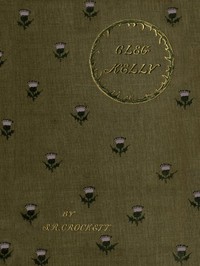
Cleg Kelly, Arab of the City: His Progress and Adventures — Text and Context
Exploration Survival Adventure Tales
122,780 recorded words. 70 minutes difference from this book's estimate.
View Gutenberg source #48354
The catalog record for The Sword of Gideon — A Closer Reading provides practical reading context through 106,676 words, 7 hr 44 min estimated reading time, and 14 detected text sections.
The text analysis averages about 20.8 words per sentence, while the detected sections provide another way to judge how the source is divided.
Project Gutenberg metadata also associates the work with “Adventure stories,” connecting these edition facts with the source record’s subject description.
Explore this collection
These alternatives are selected using recorded categories and estimated reading time.
About 534 minutes
Exploration Survival Adventure Tales
122,780 recorded words. 70 minutes difference from this book's estimate.
View Gutenberg source #48354About 392 minutes
Exploration Survival Adventure Tales
90,045 recorded words. 72 minutes difference from this book's estimate.
View Gutenberg source #49806About 554 minutes
Exploration Survival Adventure Tales
127,333 recorded words. 90 minutes difference from this book's estimate.
View Gutenberg source #46926Search stored excerpts and compare books → Choose by your preferences →
Choices use stored catalog measurements. Estimates vary with reading speed. A shared category is a catalog label, not a claim that two books have the same argument or literary quality.
Search reads excerpt text stored with this catalog and links to its associated Gutenberg record. The connection is stored in the site database; this tool does not recheck that every excerpt is word-for-word identical to that external record. Excerpt search does not cover every chapter and does not verify historical publication dates.
Catalog snapshot checked: 2026-09-25. Coverage: 94 public books, 94 available source excerpts.
Read the complete public-domain text at its original source.
Read on Project GutenbergThe novel opens on May 15, 1702, with horsemen spurring across the countryside as church bells ring and bonfires are lit to celebrate the declaration of war against France. The narrative immediately establishes a historical setting—the War of the Spanish Succession—and a mood of national excitement. The protagonist, Bevill, soon shifts the action to a claustrophobic, moonlit mansion where he stalks an unseen intruder. The prose relies heavily on sensory details: the feel of utensils on shelves, the sound of a shuffling footfall, and the fading moonlight. This close attention to physical environment and stealth creates a tense, atmospheric opening that prioritizes suspense over exposition.
The opening chapter does not begin with the protagonist but with a panoramic view of messengers spreading news of war. The date—May 15, 1702—is given with the notation "N.S." (New Style), indicating the author’s attention to historical accuracy. The description of bonfires and ringing bells conveys the relief and anticipation of the populace, who see the conflict as a chance to humble "the great, splendid tyrant" Louis XIV. This collective excitement contrasts sharply with the solitary, shadowy pursuit that follows. The shift from public celebration to private danger is abrupt, suggesting that the novel will interweave large-scale historical events with personal, covert action.
Once inside the mansion, Bevill navigates entirely by touch and sound. He runs his hand along walls, identifies kitchen utensils, and feels for keyholes. The narrative emphasizes his physical interaction with the environment: he draws a key from a lock, pockets it, and locks a door behind him. The moonlight becomes a variable ally, first illuminating the hall, then fading as a cloud passes. The intruder’s footfall is described as "soft," "shuffling," and "halting," and Bevill wonders if he feels it rather than hears it. This reliance on non-visual cues creates a palpable sense of vulnerability and focus, drawing the reader into Bevill’s heightened awareness.
Bevill’s internal monologue reveals his strategy: he plans to corner the intruder at the door he has locked, but first he ascends the stairs to investigate. The darkness deepens as rain beats against the window and wind howls around the Weiss Haus. The intruder’s step draws nearer, and Bevill hears something he cannot understand—a detail left unexplained in the excerpts. The passage builds tension through repetition of sensory cues and Bevill’s controlled determination. The author withholds the intruder’s identity, maintaining mystery. The setting—a German-sounding house ("Weiss Haus")—and the historical backdrop suggest that the intruder may be connected to the war, but the excerpts do not confirm this.
The narrator’s voice is formal and slightly archaic, with phrases like "ere long" and "nought but the servitors’ quarters." The prose is descriptive but efficient, avoiding lengthy digressions. The author uses specific period references—the War of the Spanish Succession, the States-General, the term "Le Dieudonné" for Louis XIV—to ground the story historically. However, the focus remains on immediate action and atmosphere rather than historical exposition. The excerpts suggest a novel that balances adventure with a meticulous sense of place and time, where the physical details of a 1702 mansion—its marble hall, brocade curtains, and locked doors—are as important as the plot.
These excerpts offer a narrow but vivid window into the novel’s early chapters. Readers should expect a slow-burn, sensory-driven narrative that prioritizes atmosphere and suspense over rapid action. The historical setting is established through precise details rather than lengthy explanations. Pay attention to how the author uses light, sound, and touch to create tension, and note that the intruder’s identity and motives remain deliberately obscured. The novel’s full scope—including its connection to the War of the Spanish Succession—will likely unfold through Bevill’s investigation.
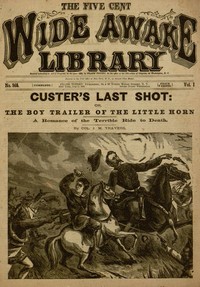
That rainy afternoon, The Sword of Gideon kept me inside its moonlit corridors, every creak measured. Afterwards, I found myself thinking about how stealth and silence shape a chase—and drifted almost idly to Custer's Last Shot; or, The Boy Trailer of the Little Horn — Context and Discussion, whose open plains felt like a strange, bright answer to all that shadowed tension.
Answer a few questions and save a private reflection on this device.