About 241 minutes
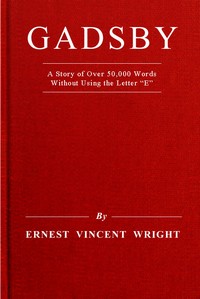
Gadsby — Reading Companion
Fairy Tales Myths Imaginary Worlds
55,292 recorded words. 1 minutes difference from this book's estimate.
View Gutenberg source #47342
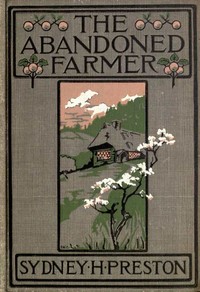
This digital edition of The Abandoned Farmer — Reading Notes is described by source-level measurements including 55,462 words, 4 hr 2 min estimated reading time, and 5 detected text sections.
The text analysis averages about 21.9 words per sentence, while the detected sections provide another way to judge how the source is divided.
Project Gutenberg metadata also associates the work with “Humorous stories,” connecting these edition facts with the source record’s subject description.
Explore this collection
These alternatives are selected using recorded categories and estimated reading time.
About 241 minutes
Fairy Tales Myths Imaginary Worlds
55,292 recorded words. 1 minutes difference from this book's estimate.
View Gutenberg source #47342About 225 minutes
Fairy Tales Myths Imaginary Worlds
51,555 recorded words. 17 minutes difference from this book's estimate.
View Gutenberg source #53995About 273 minutes
Fairy Tales Myths Imaginary Worlds
62,753 recorded words. 31 minutes difference from this book's estimate.
View Gutenberg source #54074Search stored excerpts and compare books → Choose by your preferences →
Choices use stored catalog measurements. Estimates vary with reading speed. A shared category is a catalog label, not a claim that two books have the same argument or literary quality.
Search reads excerpt text stored with this catalog and links to its associated Gutenberg record. The connection is stored in the site database; this tool does not recheck that every excerpt is word-for-word identical to that external record. Excerpt search does not cover every chapter and does not verify historical publication dates.
Catalog snapshot checked: 2026-09-25. Coverage: 94 public books, 94 available source excerpts.
Read the complete public-domain text at its original source.
Read on Project GutenbergThe story opens with a doctor's whispered verdict that the family's young son, Paul, needs to be sent to the country. The parents' over-anxious reaction—imagining lung disease—is undercut by the doctor's cheerful insistence that the boy is merely coddled. This scene establishes the book's comic tone: domestic panic inflated into absurdity, with the narrator's frantic pantomime to hide the truth from Paul setting a pattern of elaborate deception.
The narrative voice is key: the husband-narrator is prone to self-justifying outbursts and theatrical remorse, while his wife, Marion, responds with sharp retorts. Their exchanges, such as the argument over whether to confess to Aunt Sophy about store-bought chickens, reveal a marriage built on affectionate bickering and mutual exasperation.
The book is organized as a series of episodic crises, each chapter titled like a stage in a comic ordeal: “Before the Plunge,” “Peter Waydean is Found Wanting,” “An Upheaval.” The plot moves from the city to the farm, but the real action is the family’s repeated overreactions to small problems. The narrator’s voice controls the pace, often pausing to reflect on his own folly before plunging into the next disaster.
This structure mirrors the rhythm of farce: a problem arises, the narrator makes it worse, Marion reacts, and the cycle repeats. The chapters are short, each ending with a temporary resolution or a cliffhanger of embarrassment. The effect is cumulative—the reader watches the same patterns of miscommunication and overblown guilt play out in different settings, from the parlor to the barnyard.
Chickens appear as a running motif, first as imaginary playthings for Paul, then as a source of deception. The narrator buys store-bought chickens and passes them off as homegrown, a lie that haunts him when Aunt Sophy falls ill. The word “chickens” itself becomes taboo: Marion shrieks when he says it. The birds are never just food; they symbolize the family’s inability to live up to their own ideals of rural self-sufficiency.
This recurring image ties together the book’s humor and its underlying anxiety about authenticity. The narrator’s guilt over the chickens is disproportionate, but that’s the point—the comedy comes from the gap between the trivial offense and the monumental remorse. The motif recurs in later chapters, suggesting that the family’s farm life is a performance that never quite convinces even themselves.
The narrative shifts rapidly between indoor and outdoor settings, often within a single paragraph. The opening scene moves from the doctor’s whispered diagnosis in the parlor to Paul chasing imaginary chickens under the table, then to the hall. This restless movement reflects the family’s unsettled state: they are always in transition, never fully at home in either city or country.
Later excerpts show the same pattern: a quarrel in the house, a dash to the train, a return to the farm. The physical movement mirrors the emotional volatility. The narrator’s voice anchors these shifts, commenting on the absurdity of each new location. The result is a book that feels breathless, as if the family is perpetually running from one crisis to the next, never pausing to catch their breath.
The narrator’s voice is the book’s central comic device. He is unreliable in a specific way: he admits his faults only to exaggerate them, turning apologies into performances. When he takes the blame for the chicken deception, he immediately expects gratitude; when Marion doesn’t oblige, he launches into a tirade. His self-awareness is partial, used to deflect criticism rather than to change.
This voice shapes the reader’s experience. We are always inside his head, hearing his rationalizations and his theatrical remorse. The effect is intimate and claustrophobic—we see every misstep from his skewed perspective. The humor depends on our recognizing what he cannot: that his efforts to control the narrative only make things worse. The book’s structure, with its episodic crises, is perfectly suited to this voice, allowing each chapter to showcase a new failure of self-knowledge.
Readers should approach The Abandoned Farmer as a comedy of manners set on a farm, not a realistic portrait of rural life. The humor lies in the narrator’s voice and the family’s repeated failures to adapt. Pay attention to the gaps between what the narrator says and what he does, and to the recurring motifs—chickens, guilt, and the tension between city and country. The book rewards those who enjoy watching characters dig themselves into holes of their own making.
Sometimes I think about that poor city family and their chickens, all that comic chaos masking something tender underneath — the way humour carries what we can't say plainly. It reminded me of another old book's quiet charm, The Marryers: A History Gathered from a Brief of the Honorable Socrates Potter — Inside the Classic, which has that same gentle, knowing wink at human foolishness. Strange how these stories stay with you.
Your answers remain private and are stored only in this browser.