About 403 minutes
Miriam: A Tale of Pole Moor and the Greenfield Hills — Key Ideas to Explore
Fairy Tales Myths Imaginary Worlds
92,530 recorded words. 66 minutes difference from this book's estimate.
View Gutenberg source #54333
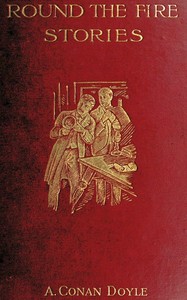
This digital edition of Round the Fire Stories — Text and Context is described by source-level measurements including 107,775 words, 7 hr 49 min estimated reading time, and 21 detected text sections.
The text analysis averages about 16.5 words per sentence, while the detected sections provide another way to judge how the source is divided.
Project Gutenberg metadata also associates the work with “Horror tales, English,” connecting these edition facts with the source record’s subject description.
Explore this collection
These alternatives are selected using recorded categories and estimated reading time.
About 403 minutes
Fairy Tales Myths Imaginary Worlds
92,530 recorded words. 66 minutes difference from this book's estimate.
View Gutenberg source #54333About 398 minutes
Fairy Tales Myths Imaginary Worlds
91,460 recorded words. 71 minutes difference from this book's estimate.
View Gutenberg source #51970About 578 minutes
Fairy Tales Myths Imaginary Worlds
132,729 recorded words. 109 minutes difference from this book's estimate.
View Gutenberg source #54931Search stored excerpts and compare books → Choose by your preferences →
Choices use stored catalog measurements. Estimates vary with reading speed. A shared category is a catalog label, not a claim that two books have the same argument or literary quality.
Search reads excerpt text stored with this catalog and links to its associated Gutenberg record. The connection is stored in the site database; this tool does not recheck that every excerpt is word-for-word identical to that external record. Excerpt search does not cover every chapter and does not verify historical publication dates.
Catalog snapshot checked: 2026-09-25. Coverage: 94 public books, 94 available source excerpts.
Read the complete public-domain text at its original source.
Read on Project GutenbergDoyle’s preface sets a deliberate mood: these stories are meant to be read “round the fire” on a winter’s night, an atmosphere he compares to an artist choosing the light and hanging of a picture. The collection delivers on that promise with seventeen tales that move from occult antiquarianism to railway thrillers, held together by a recurring narrative pattern—a calm, rational frame that suddenly gives way to a shriek or a confession. The frontispiece, captioned “I burst with a shriek into my own life,” signals the collection’s preoccupation with moments when ordinary existence is violently interrupted.
Many stories open with a collector or a scholar describing a curious object—a leather funnel, a japanned box, a jew’s breastplate—in precise, almost clinical detail. The narrator of “The Leather Funnel” notes the “grey tiles stained with lichens” and the library of “Talmudic, cabalistic” works before the horror emerges. This patient accumulation of realistic setting makes the subsequent uncanny event feel more intrusive. Doyle often lets a single object anchor the tale: the funnel itself, the pot of caviare, the sealed room. The reader is invited to examine the evidence alongside the narrator, only to find that the evidence leads somewhere irrational.
The collection’s most striking structural device is the embedded confession. In “The Lost Special,” a long monologue from a criminal mastermind details a meticulously planned train robbery, complete with bribed guards and alternate routes. The voice is cool, boastful, and detailed—“We prepared six plans, each more elaborate than the last”—until the plan unravels. Doyle shifts pace abruptly: the measured exposition of the plot gives way to a terse, almost breathless account of its failure. Elsewhere, a first-person narrator may recount a supernatural encounter in a steady, matter-of-fact tone, then break into exclamation or ellipsis. These changes in tempo mirror the stories’ central tension between order and chaos.
Certain motifs recur across the collection: the specialist who knows too much, the object that carries a curse, the journey that goes wrong. Doyle’s narrators often share a voice—educated, slightly detached, fond of cataloguing—whether they are a doctor, a collector, or a criminal. The dialogue, when it appears, is crisp and functional, rarely ornamental. In the excerpts, the criminal’s speech is laced with self-regard: “I am always most masterful where another would be appalled.” This consistency of tone across different narrators gives the collection a unified feel, even as the settings range from Parisian libraries to Liverpool docks. The reader learns to expect that a calm surface will soon be broken by a shriek.
Several stories are framed as tales told to a silent listener—a friend, a detective, a dinner companion. This oral quality is reinforced by the preface’s invitation to read aloud “round the fire.” The listener rarely interrupts; their presence justifies the detailed exposition and the confessional mode. In “The Lost Special,” the criminal addresses an unnamed interrogator, explaining his methods with the pride of a craftsman. The effect is to make the reader feel like that listener, drawn into complicity with the teller. Doyle uses this frame to heighten suspense: the listener, like the reader, can only wait for the inevitable catastrophe.
Readers approaching Round the Fire Stories will find that the collection rewards attention to its framing devices—the objects, the confessions, the listeners. The stories are best taken one at a time, ideally in a setting that matches Doyle’s ideal: a quiet room, a fire, and a willingness to let the voice of the tale carry you from the mundane to the grotesque. The variety of plots means that not every story will appeal equally, but the consistency of narrative craft makes the whole greater than the sum of its parts.
Reading these framed tales of winter terror, I remembered my grandfather’s pipe-smoke and the creak of his chair as he’d pause mid-story, letting the silence swell. That same shiver returned with A Study In Shadows — Reading Companion, where quiet unease gathers around a single ordinary object, until the room feels suddenly colder, and you’re glad for a lamp left burning.
Answer a few questions and save a private reflection on this device.