About 241 minutes
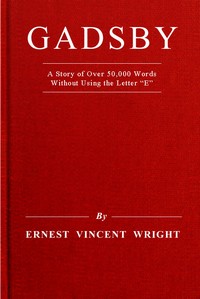
Gadsby — Reading Companion
Fairy Tales Myths Imaginary Worlds
55,292 recorded words. 16 minutes difference from this book's estimate.
View Gutenberg source #47342
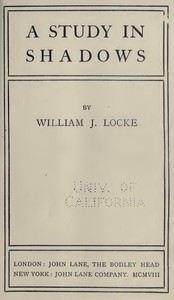
A Study In Shadows — Reading Companion can be approached with a clearer sense of reading commitment from its source measurements: 51,555 words, 3 hr 45 min estimated reading time, and 7 detected text sections.
The text analysis averages about 13.2 words per sentence, while the detected sections provide another way to judge how the source is divided.
Project Gutenberg metadata also associates the work with “Mate selection -- Fiction,” connecting these edition facts with the source record’s subject description.
Explore this collection
These alternatives are selected using recorded categories and estimated reading time.
About 241 minutes
Fairy Tales Myths Imaginary Worlds
55,292 recorded words. 16 minutes difference from this book's estimate.
View Gutenberg source #47342About 242 minutes
Fairy Tales Myths Imaginary Worlds
55,462 recorded words. 17 minutes difference from this book's estimate.
View Gutenberg source #48453About 184 minutes
Fairy Tales Myths Imaginary Worlds
42,259 recorded words. 41 minutes difference from this book's estimate.
View Gutenberg source #50088Search stored excerpts and compare books → Choose by your preferences →
Choices use stored catalog measurements. Estimates vary with reading speed. A shared category is a catalog label, not a claim that two books have the same argument or literary quality.
Search reads excerpt text stored with this catalog and links to its associated Gutenberg record. The connection is stored in the site database; this tool does not recheck that every excerpt is word-for-word identical to that external record. Excerpt search does not cover every chapter and does not verify historical publication dates.
Catalog snapshot checked: 2026-09-25. Coverage: 94 public books, 94 available source excerpts.
Read the complete public-domain text at its original source.
Read on Project GutenbergThe Pension Boccard in winter is a stage for quiet desperation. Felicia Graves, fresh from a garrison town's orderly society, finds herself among six lone women whose lives defy her comfortable philosophy. The novel opens with her puzzlement, not as a plot device but as a structural lens: the reader, like Felicia, must piece together the shadows these women cast. Locke's prose lingers on the pension's seasonal shift—summer's gaiety replaced by a "half-frightened speculation" that permeates the winter months. This contrast between surface and depth, between the seen and the inferred, becomes the book's governing pattern.
The Pension Boccard is not merely a setting but a character in its own right, its rhythms dictating the novel's pace. In summer, it brims with "eager, laughing holiday-makers," dances, and flirtations; in winter, the same space contracts into a hothouse of introspection. Locke emphasizes this duality through Felicia's observations: the pension's life depends on "the ever-changing current of guests" and "public distractions," yet the core residents remain fixed, their stories slowly surfacing. The old gentleman among the lone women hints at a gender imbalance that sharpens the narrative's focus on female isolation. The pension's physical details—its dining-room, salons, and the Geneva streets beyond—serve as a controlled environment where emotional storms can brew, much like the thunderstorm that later interrupts a crucial conversation.
A key excerpt unfolds on a boat at night, where Katherine and Raine Chetwynd share a charged exchange. Raine reveals a past he has "put to rest for ever," calling it a "ghost" until he knew Katherine. The dialogue is taut with hesitation: Katherine's "I live in a great many" fancies, Raine's plea for freedom from memory. Their hands meet, then separate when a jodeling song startles them—a mundane intrusion that shatters intimacy. The storm that follows is no mere backdrop: a flash of lightning and a "terrific peal of thunder" force Katherine to grasp Raine's arm, breaking her resolve. Locke uses the storm to externalize internal conflict, the sudden rain mirroring the emotional downpour. The scene's power lies in what remains unsaid—Katherine's yearning "to unlock the flood-gates of a love" she dares not voice.
Throughout the excerpts, characters are haunted by histories they cannot shed. Raine speaks of "a little gradual change, a little daily hardening or softening" that transforms people into "different entities," yet his own past clings like a ghost. Katherine, too, bears a sadness glimpsed during a performance of "Denise"—a detail that suggests art mirrors life. Felicia's initial confusion stems from her inability to reconcile these hidden sorrows with her "well-ordered family systems." The novel's title, A Study In Shadows, literalizes this theme: shadows are not absences of light but presences of something obscured. Locke's characters exist in a twilight where memory and desire compete, and the pension's winter gloom becomes a metaphor for the unresolved past that shapes every present moment.
Readers should attend to the novel's deliberate pacing and its reliance on indirect revelation. Locke often withholds key information, letting gestures and silences speak louder than declarations. The storm scene, for instance, resolves nothing—it merely postpones a decision. This technique rewards patience and close attention to recurring motifs: the contrast between summer and winter, the interplay of public and private selves, and the persistent imagery of light and shadow. Approach the text as a study in atmosphere rather than plot, and let the pension's confined world gradually disclose its depths.
That Geneva pension—all those veiled sorrows behind polite tea—reminds me of a rainy afternoon years ago, rereading Mr. Wycherly's Wards — Reading Notes. Same hush, same sense of rooms holding breaths. I felt then, as now, that old pull: how strangers’ hidden griefs mirror our private ones, though we never speak of them aloud.
Answer a few questions and save a private reflection on this device.