About 93 minutes
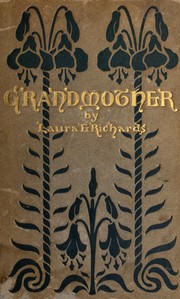
Grandmother: The Story of a Life That Never Was Lived — A Closer Reading
Fairy Tales Myths Imaginary Worlds
21,277 recorded words. 26 minutes difference from this book's estimate.
View Gutenberg source #51701

The catalog record for Elderflowers — Edition Insights provides practical reading context through 15,344 words, 1 hr 7 min estimated reading time, and 2 detected text sections.
The text analysis averages about 24.2 words per sentence, while the detected sections provide another way to judge how the source is divided.
Project Gutenberg metadata also associates the work with “Jewish women -- Fiction,” connecting these edition facts with the source record’s subject description.
Explore this collection
These alternatives are selected using recorded categories and estimated reading time.
About 93 minutes
Fairy Tales Myths Imaginary Worlds
21,277 recorded words. 26 minutes difference from this book's estimate.
View Gutenberg source #51701About 120 minutes
Fairy Tales Myths Imaginary Worlds
27,571 recorded words. 53 minutes difference from this book's estimate.
View Gutenberg source #49731About 184 minutes
Fairy Tales Myths Imaginary Worlds
42,259 recorded words. 117 minutes difference from this book's estimate.
View Gutenberg source #50088Search stored excerpts and compare books → Choose by your preferences →
Choices use stored catalog measurements. Estimates vary with reading speed. A shared category is a catalog label, not a claim that two books have the same argument or literary quality.
Search reads excerpt text stored with this catalog and links to its associated Gutenberg record. The connection is stored in the site database; this tool does not recheck that every excerpt is word-for-word identical to that external record. Excerpt search does not cover every chapter and does not verify historical publication dates.
Catalog snapshot checked: 2026-09-25. Coverage: 94 public books, 94 available source excerpts.
Read the complete public-domain text at its original source.
Read on Project GutenbergThe narrator, a decorated medical officer near the end of his life, opens with a clinical inventory of his own resilience—thick-skinned, immune to epidemic viruses—before pivoting to a January visit to a stately home where no one is ill. This disjunction between professional composure and the memory that follows sets the tone for a story that circles around a single, unresolved encounter. The title Elderflowers is explicitly linked to Syringa vulgaris, a plant whose scent will recur, though the excerpts offer only bare branches in winter.
The narrator introduces himself with a string of credentials—Order of the Red Eagle, medical officer, father of successful children—yet immediately undercuts this stability. He admits that doctors become thick-skinned, but the hardest task begins after a patient dies, when words of consolation are needed. This professional armor is tested by the memory he is about to relate. The phrase “All this has nothing to do, of course, with the observations that follow” is a deliberate misdirection; the entire narrative is framed as evidence of “what a wonderful thing the human soul is.” The reader is left to measure the gap between the doctor’s public role and the private guilt that surfaces when he recalls a young woman’s accusation: “you wouldn't lift a finger to pull me back.”
Jemimah speaks of Mahalath, a dancer who “died because her soul was too proud to reveal outwardly what she suffered for her people inwardly.” She reads gravestones in Beth-Chaim, the Jewish cemetery, and claims the dead pulled Mahalath “down below.” The language is literal and ominous: Jemimah stamps her foot, clenches her fist, and warns that her own heart will kill her when it grows too big. She rejects the narrator’s offer of better doctors, insisting she will remain where her ancestors have been buried “since the destruction of the Temple.” Her defiance is paired with a diagnosis from a “great lady doctor” in the ghetto—a detail that grounds her condition in local, not scientific, authority. The narrator’s love confession is met with a challenge he cannot meet; he averts his eyes.
The title plant appears only at the margins of the excerpts: the narrator states that Syringa vulgaris has had an influence on him, and Jemimah notes that “these elder trees are bare” in winter. The shrub is never described in bloom. This absence may be significant—the memory is tied to a season of bare branches, not flowers. The narrator’s recollection is triggered by a January visit, and the elderflowers themselves are deferred, perhaps symbolizing something that never fully blossoms. The reader is left to infer how the scent or sight of elderflowers might later return, but the text as given withholds that moment, keeping the plant as a promise or a ghost.
The setting is Prague’s Jewish quarter, described through Jemimah’s words as a place of “decadent and pestilential atmosphere” from which she refuses to escape. The cemetery, Beth-Chaim, is where she feels the sun and learns the stories of the dead. The narrator, a medical student, is an outsider who brings the promise of a different world—better doctors, a beautiful life—but Jemimah counters with a fatalism rooted in her body and her history. Her heart condition is both physical and metaphorical: it will “overstep the limits God has set.” The ghetto is not just a location but a boundary that the narrator cannot cross, and Jemimah’s refusal to leave it becomes a form of integrity.
The excerpts break off before the story’s resolution, leaving the narrator’s guilt and Jemimah’s fate suspended. Readers should attend to the way Raabe uses the doctor’s retrospective voice to create distance—every detail is filtered through a memory that may be unreliable. The elderflowers, never seen in bloom, may be the key to understanding what the narrator cannot say directly. Pay attention to the moments when the clinical tone cracks, and to Jemimah’s own voice, which carries the story’s emotional and historical weight.
I kept thinking about Jemimah’s quiet strength, the weight of her heritage pressing gently against her fragile heart. It made me recall another story, tucked away in the hills, where memory and landscape feel just as inseparable. Sometimes a certain loneliness in one voice echoes another. Here is that quieter tale: Miriam: A Tale of Pole Moor and the Greenfield Hills — Key Ideas to Explore. Both seem to ask how we carry what we inherit.
Answer a few questions and save a private reflection on this device.