About 466 minutes
The Stickit Minister's Wooing, and Other Galloway Stories — Story, Setting & Ideas
England London Nineteenth Century Fiction
107,059 recorded words. 1 minutes difference from this book's estimate.
View Gutenberg source #49342
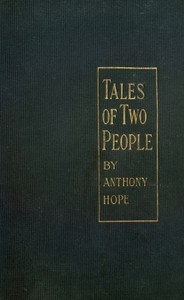
Before opening Tales of two people — A Reader’s Guide, the edition data offers a quick orientation: 107,279 words, 7 hr 47 min estimated reading time, and 11 detected text sections.
The text analysis averages about 13.9 words per sentence, while the detected sections provide another way to judge how the source is divided.
Project Gutenberg metadata also associates the work with “England -- Social life and customs -- Fiction,” connecting these edition facts with the source record’s subject description.
Explore this collection
These alternatives are selected using recorded categories and estimated reading time.
About 466 minutes
England London Nineteenth Century Fiction
107,059 recorded words. 1 minutes difference from this book's estimate.
View Gutenberg source #49342About 483 minutes
England London Nineteenth Century Fiction
111,081 recorded words. 16 minutes difference from this book's estimate.
View Gutenberg source #48320About 505 minutes
England London Nineteenth Century Fiction
115,984 recorded words. 38 minutes difference from this book's estimate.
View Gutenberg source #47319Search stored excerpts and compare books → Choose by your preferences →
Choices use stored catalog measurements. Estimates vary with reading speed. A shared category is a catalog label, not a claim that two books have the same argument or literary quality.
Search reads excerpt text stored with this catalog and links to its associated Gutenberg record. The connection is stored in the site database; this tool does not recheck that every excerpt is word-for-word identical to that external record. Excerpt search does not cover every chapter and does not verify historical publication dates.
Catalog snapshot checked: 2026-09-25. Coverage: 94 public books, 94 available source excerpts.
Read the complete public-domain text at its original source.
Read on Project GutenbergAnthony Hope's Tales of Two People (1907) opens with a narrator who immediately distances himself from conventional judgment: the protagonist, Lord Lynborough, is introduced not through action but through the dismissive verdict of 'common opinion.' The voice is arch, parenthetical, and fond of understatement—'he turned out only a singularly erratic individual'—and it sets the tone for a collection that prizes ironic detachment over moral earnestness. The stories that follow, including the novella-length 'Helena's Path,' share a preoccupation with how people present themselves and how they are perceived, often through the filter of a knowing, slightly amused narrator.
The excerpts reveal a writer attentive to the rhythms of conversation and the weight of unspoken implications. In 'Miss Gladwin's Chance,' a financial arrangement becomes a psychological chess match, with the solicitor Foulkes parsing every hesitation and smile. Hope's characters rarely say exactly what they mean, and the pleasure of reading lies in tracking the gap between their words and their intentions.
The opening of 'Helena's Path' establishes a narrative voice that is both intimate and judgmental, yet refuses to settle on a fixed moral stance. The narrator describes Lord Lynborough's expulsion from Eton, Christ Church, and the Grenadier Guards not as disgrace but as 'explosion,' and treats his subsequent career—soup-kitchen, sunken yacht, watered beer—with a kind of deadpan relish. This voice is the collection's most consistent feature: it observes social absurdities without condemning them, and it trusts the reader to catch the irony.
Hope's prose is economical, often relying on a single adjective or a parenthetical aside to shift the reader's sympathies. When the narrator of 'Miss Gladwin's Chance' notes that the heroine's bitterness 'was not good to witness,' the phrase does more work than a longer analysis would. The effect is to create a world where manners are a performance and where the narrator, though omniscient, chooses to reveal only what serves the story's tone.
Several stories in the collection hinge on precise sums of money, and the excerpts show Hope using financial details to expose character. In 'Miss Gladwin's Chance,' the protagonist insists on settling exactly one hundred thousand pounds on her rival, a figure she has 'chosen the most carefully.' The solicitor Foulkes calculates the arithmetic of love versus income—'twenty-five thousand a year against love and three thousand'—and the story's tension derives from whether generosity is genuine or strategic.
Hope's characters are acutely aware of the social meanings of money. Miss Gladwin denies that her gift is 'quixotic,' yet her reasoning is tangled with resentment and a desire to be 'fair.' The narrator's dry observation—'There is more difference between three thousand pounds and nothing than exists between three thousand and all the rest of the money in the world'—captures the collection's unsentimental view of economic reality. Money is never just currency; it is a tool for testing loyalty, independence, and self-deception.
Hope's dialogue is a study in indirection. Characters speak in complete sentences, but their meaning often lies in what they omit or deflect. In 'Miss Gladwin's Chance,' the exchange between Foulkes and his client is a series of polite evasions: she interrupts him, changes the subject, and finally dismisses him with a handshake and a cryptic remark about being 'fair to myself too.' The reader must infer the emotional stakes from the rhythm of the conversation rather than from explicit confession.
This technique is consistent across the excerpts. The narrator rarely explains a character's inner state; instead, he reports gesture and tone—'her voice trembled a little,' 'she smiled again, and with the old touch of irony.' The effect is to create a surface of civility beneath which complex calculations and suppressed feelings churn. Hope trusts his readers to read between the lines, and the stories reward careful attention to what is not said.
Readers approaching Tales of Two People should attend to the shifts in narrative distance between stories. The novella 'Helena's Path' sustains a single ironic voice over many chapters, while shorter pieces like 'The Grey Frock' or 'Love's Logic' compress their effects into a few pages. Hope's consistency lies in his dialogue and his refusal to sentimentalize; his characters are rarely wholly admirable, but they are always interesting. The collection rewards those who enjoy watching people negotiate the gap between what they want and what they admit.
The rain blurred the windows while Helena’s chilled politeness stayed sharp in my mind. Afterwards, I sat with that curious feeling of characters keeping secrets even from themselves. My hand drifted to another shelf, and The Dark Other — A Closer Reading fell open, offering a stranger, more restless version of that same inward hiding.
Use these questions to collect your thoughts before moving on.