About 236 minutes
The Man of Last Resort; Or, The Clients of Randolph Mason — Themes and Context
England London Nineteenth Century Fiction
54,192 recorded words. 1 minutes difference from this book's estimate.
View Gutenberg source #51955
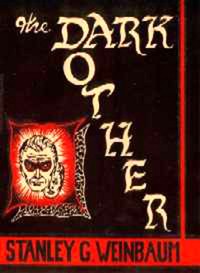
The catalog record for The Dark Other — A Closer Reading provides practical reading context through 53,918 words, 3 hr 55 min estimated reading time, and 7 detected text sections.
The text analysis averages about 10.7 words per sentence, while the detected sections provide another way to judge how the source is divided.
Project Gutenberg metadata also associates the work with “Horror tales,” connecting these edition facts with the source record’s subject description.
Explore this collection
These alternatives are selected using recorded categories and estimated reading time.
About 236 minutes
England London Nineteenth Century Fiction
54,192 recorded words. 1 minutes difference from this book's estimate.
View Gutenberg source #51955About 239 minutes
England London Nineteenth Century Fiction
54,928 recorded words. 4 minutes difference from this book's estimate.
View Gutenberg source #51956About 253 minutes
England London Nineteenth Century Fiction
58,072 recorded words. 18 minutes difference from this book's estimate.
View Gutenberg source #48163Search stored excerpts and compare books → Choose by your preferences →
Choices use stored catalog measurements. Estimates vary with reading speed. A shared category is a catalog label, not a claim that two books have the same argument or literary quality.
Search reads excerpt text stored with this catalog and links to its associated Gutenberg record. The connection is stored in the site database; this tool does not recheck that every excerpt is word-for-word identical to that external record. Excerpt search does not cover every chapter and does not verify historical publication dates.
Catalog snapshot checked: 2026-09-25. Coverage: 94 public books, 94 available source excerpts.
Read the complete public-domain text at its original source.
Read on Project GutenbergThe novel opens with a conversation that immediately establishes its central tension: Nicholas Devine and Patricia Lane discuss "pure horror" as an aesthetic concept, invoking Poe, Baudelaire, Hogarth, and Goya. This is not a casual chat but a deliberate framing device—the characters themselves are self-conscious about the difficulty of achieving horror "detached from experience." Weinbaum's dialogue carries the weight of the theme, with Pat's interjections grounding Nick's abstract theorizing in concrete reactions, like her shudder at the mention of cats. The setting—a parked car overlooking night-dark Lake Michigan—mirrors the liminal space between reality and nightmare that the story will inhabit.
Weinbaum's word choices consistently reinforce an atmosphere of unease. In the opening chapter, Nick describes Poe's black cat as "gigantic, unnaturally, abnormally large," piling on adjectives to create a sense of excess. Later, Pat's thoughts use words like "disconsolately," "frustration," and "futile buzzing" to convey helplessness. The author avoids melodramatic language; instead, he selects terms that suggest a clinical observation of fear—"formless fear," "fixed idea," "possessed by a devil." This precision makes the horror feel intellectualized, as if the characters are diagnosing their own terror.
The characters rarely speak without arguing a point. Nick and Pat's opening exchange is a philosophical debate; later, Pat challenges Dr. Horker's scientific explanations with theological ones: "Then they're devils!" she declares. Weinbaum uses dialogue to juxtapose competing frameworks—psychiatry, theology, literary criticism—without resolving them. Dr. Horker's chuckling response, "That's good orthodox theology," acknowledges the clash but doesn't settle it. This technique keeps the reader suspended between interpretations, mirroring the uncertainty of the characters themselves.
The chapter titles function as a secondary narrative, charting a descent from abstract theory into visceral horror. Early titles like "Pure Horror" and "Science of Mind" suggest intellectual inquiry, while later ones—"Descent into Avernus," "Rescue from Abaddon," "Werewolf," "The Demon Lover"—invoke mythological and Gothic imagery. The progression from "A Modern Mr. Hyde" to "The Dark Other" signals a shift from literary allusion to direct naming of the antagonist. Weinbaum uses these headings to guide reader expectations, creating a roadmap of escalating dread.
Weinbaum plants recurring details that accumulate meaning. The black cat from Poe's story is invoked early and reappears in Pat's aversion to "treacherous beasts." The motif of eyes—Nick's "lean profile, clear-cut against the distant light" and later "the red eyes return"—suggests a predatory gaze. The telephone becomes a symbol of failed connection: Pat's "futile buzzing" and her repeated attempts to reach Nick emphasize isolation. These details are not merely atmospheric; they are structural, linking scenes and reinforcing the theme of inescapable horror.
Readers attentive to Weinbaum's craft will notice how he builds horror through restraint: the most disturbing moments are often those left unsaid, implied by a character's shudder or a sudden silence. The novel rewards close attention to its verbal texture—the way a single adjective can shift a scene from mundane to menacing. Approach the text as a puzzle of competing explanations, and let the dialogue guide you through the dark.
Weinbaum’s characters circle the dark with clinical words, hoping diction will hold back the nameless thing. It reminded me, oddly, of the quiet cunning in The Strange Schemes of Randolph Mason — Inside the Classic, where cleverness itself becomes a kind of haunted house. Both feel like whispered arguments at a library table, where the lamps are too low, and every answer only deepens the shadows.
Use these questions to collect your thoughts before moving on.