About 661 minutes
We and Our Neighbors; or, The Records of an Unfashionable Street — A Reader’s Guide
England London Nineteenth Century Fiction
151,999 recorded words. 8 minutes difference from this book's estimate.
View Gutenberg source #48603
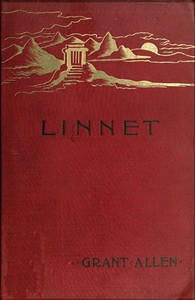
Linnet: A Romance — Key Ideas to Explore can be approached with a clearer sense of reading commitment from its source measurements: 150,144 words, 10 hr 53 min estimated reading time, and 16 detected text sections.
The text analysis averages about 18.3 words per sentence, while the detected sections provide another way to judge how the source is divided.
Project Gutenberg metadata also associates the work with “London (England) -- Fiction,” connecting these edition facts with the source record’s subject description.
Explore this collection
These alternatives are selected using recorded categories and estimated reading time.
About 661 minutes
England London Nineteenth Century Fiction
151,999 recorded words. 8 minutes difference from this book's estimate.
View Gutenberg source #48603About 615 minutes
England London Nineteenth Century Fiction
141,302 recorded words. 38 minutes difference from this book's estimate.
View Gutenberg source #49331About 611 minutes
England London Nineteenth Century Fiction
140,390 recorded words. 42 minutes difference from this book's estimate.
View Gutenberg source #46857Search stored excerpts and compare books → Choose by your preferences →
Choices use stored catalog measurements. Estimates vary with reading speed. A shared category is a catalog label, not a claim that two books have the same argument or literary quality.
Search reads excerpt text stored with this catalog and links to its associated Gutenberg record. The connection is stored in the site database; this tool does not recheck that every excerpt is word-for-word identical to that external record. Excerpt search does not cover every chapter and does not verify historical publication dates.
Catalog snapshot checked: 2026-09-25. Coverage: 94 public books, 94 available source excerpts.
Read the complete public-domain text at its original source.
Read on Project GutenbergGrant Allen's Linnet: A Romance begins not in London but in the Zillerthal, a Tyrolean valley described as "the centre of all that is most Tyrolese in the Tyrol." The opening chapter introduces Mr. Florian Wood and establishes a setting where itinerant zither-players and singers set out from alpine villages to seek fortune abroad. This geographical specificity—the Alps, Tyrol, and later London—anchors the romance in contrasting worlds.
The narrative voice is direct and observant, noting details like "green braces on shoulders" and "copper kreuzers" in leather belts. The prose moves between scenic description and intimate dialogue, as seen in later excerpts where characters like Rue and Will speak with raw emotion. The author's note acknowledges debts to Baillie-Grohman's work on Tyrol, grounding the setting in researched local colour.
The novel's first sentence—"'Twas at Zell in the Zillerthal"—immediately situates the reader in a specific Alpine locale. Allen uses the valley as a cultural wellspring, describing it as the source of itinerant performers who "pervade every capital and every spa in Europe." This framing suggests that the romance will involve movement between provincial authenticity and metropolitan sophistication.
The prose in the opening pages is leisurely, with long sentences that catalogue the Tyrolese peasant's costume and customs. The narrator adopts a knowing tone, warning readers not to expect "the Tyrolese peasant of sober reality masquerading about in that extremely operatic and brigand-like costume." This meta-commentary hints at the novel's awareness of romantic stereotypes, even as it employs them.
Notable is the absence of the heroine Linnet from the first chapter; the title character is introduced only in Chapter IV. The opening instead focuses on establishing setting and introducing Mr. Florian Wood, whose name suggests a cultivated, perhaps artificial, persona. Readers attentive to place will note how the Zillerthal functions as both a literal and symbolic origin point for the characters' journeys.
Later excerpts shift to London, where the tone becomes more intimate and psychologically charged. In one scene, Rue tells Will, "Remember, I'm a woman; my pride is fighting hard against my love to-night." The dialogue is taut with restraint and vulnerability. Will's internal conflict is rendered through physical detail: "something moist fell suddenly on his hand that grasped the bannister"—a tear from his own eyes.
The narrator interjects with commentary: "For a poet is a man even more than the rest of us." This authorial aside underscores the theme of artistic sensibility versus emotional honesty. The scene ends with Will acknowledging that Linnet's image remains "graven" on his heart, setting up a love triangle that hinges on memory and fidelity.
Allen's handling of emotion is direct, avoiding sentimentality. The characters speak in measured, almost theatrical declarations, yet the physical details—tears, a hand on a bannister—ground the drama in tangible reality. The London setting, with its "well-dressed dawdlers" on Bond Street, contrasts sharply with the Tyrolean valleys, emphasizing the characters' dislocation.
Music threads through the excerpts, from the zither-players of the Zillerthal to Will's occupation as a poet working "up rhymes to ready-made tunes." The novel's title, Linnet, itself evokes a songbird, and the narrative frequently associates characters with musicality. The itinerant performers are described as "true modern troubadours," suggesting that performance is both a livelihood and a metaphor for identity.
In the London scene, a stranger's "tuneful voice" and "music hall" get-up—"the flaring blue of his made-up silk tie, the obtrusive glitter of the false diamond pin"—mark him as a performer of a different sort. The contrast between authentic Tyrolean song and metropolitan artifice is implicit. Will, as a poet, occupies a middle ground, translating raw emotion into structured verse.
Readers should note how musical references accumulate: the zither, the jodel, the ready-made tunes. These details are not merely decorative; they signal the characters' struggles between genuine feeling and performed roles. The novel's romance may hinge on whether love can be authentic in a world of staged identities.
The excerpts reveal a novel that alternates between scenic description and dramatic dialogue. The opening's expansive, almost ethnographic tone gives way to tight, emotional exchanges in later chapters. This shift mirrors the characters' movement from the open landscapes of Tyrol to the confined spaces of London drawing-rooms.
Allen employs chapter titles that are often ironic or allusive, such as "To Introduce Mr Florian Wood" and "Auld Lang Syne." These headings guide reader expectations without revealing plot. The author's note, citing a source on Tyrol, signals a commitment to verisimilitude, yet the narrative also indulges in romantic conventions—the love triangle, the poet hero, the mysterious heroine.
First-time readers should attend to the way setting influences character. The Zillerthal is not mere backdrop; it shapes the characters' values and conflicts. Likewise, London functions as a space of temptation and disguise. The romance, as suggested by the excerpts, may ultimately test whether love can survive the transition from one world to another.
Allen's romance rewards attention to its dual settings and the musical motifs that bind them. The opening's ethnographic detail gives way to psychological drama, but the Tyrolean landscape never fully recedes. Readers who track the characters' movements between Zell and Bond Street will find a narrative that uses place to explore authenticity, performance, and the persistence of memory. The love triangle, while central, is only one thread in a story that also examines how identity is shaped by origin and aspiration.
Reading Linnet again, I found myself thinking about the way its heroine seems split between the bright Alpine air and a darker, inner gravity. That strange pull between two selves reminded me of another story I once loved, where a similar shadow lingers in someone's eyes. It’s all there in The Dark Other — A Closer Reading, a quieter echo of the same feeling.
Answer a few questions and save a private reflection on this device.