About 345 minutes
Squire Arden; volume 2 of 3 — Edition Insights
England London Nineteenth Century Fiction
79,141 recorded words. 3 minutes difference from this book's estimate.
View Gutenberg source #54122
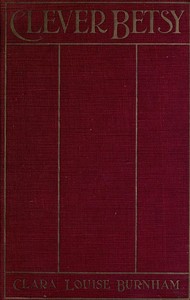
For Clever Betsy: A Novel — A Reader’s Guide, the stored edition analysis reports 78,448 words, 5 hr 42 min estimated reading time, and 35 detected text sections.
The text analysis averages about 12.6 words per sentence, while the detected sections provide another way to judge how the source is divided.
Project Gutenberg metadata also associates the work with “Ship captains -- Fiction,” connecting these edition facts with the source record’s subject description.
Explore this collection
These alternatives are selected using recorded categories and estimated reading time.
About 345 minutes
England London Nineteenth Century Fiction
79,141 recorded words. 3 minutes difference from this book's estimate.
View Gutenberg source #54122About 339 minutes
England London Nineteenth Century Fiction
77,913 recorded words. 3 minutes difference from this book's estimate.
View Gutenberg source #54186About 347 minutes
England London Nineteenth Century Fiction
79,757 recorded words. 5 minutes difference from this book's estimate.
View Gutenberg source #49504Search stored excerpts and compare books → Choose by your preferences →
Choices use stored catalog measurements. Estimates vary with reading speed. A shared category is a catalog label, not a claim that two books have the same argument or literary quality.
Search reads excerpt text stored with this catalog and links to its associated Gutenberg record. The connection is stored in the site database; this tool does not recheck that every excerpt is word-for-word identical to that external record. Excerpt search does not cover every chapter and does not verify historical publication dates.
Catalog snapshot checked: 2026-09-25. Coverage: 94 public books, 94 available source excerpts.
Read the complete public-domain text at its original source.
Read on Project GutenbergThe novel opens with a shouted nautical greeting—"Ahoy there—The Clever Betsy!"—as a grizzled ship captain hails a woman shaking a rug at a cottage gate. This maritime idiom immediately establishes the seaport setting and the title character's nickname, which the narrator will later treat as both a label and a judgment. The early chapters alternate between Betsy's brisk, practical actions and the narrator's dry commentary, a pattern that persists throughout the excerpts. Burnham uses Betsy's internal debates—often punctuated by a "New England conscience" that speaks "rather tartly"—to reveal her calculations about Hiram Salter and Rosalie Vincent. The voice is colloquial but precise, with Betsy's thoughts rendered in dialect while the narrator maintains a polished, ironic distance.
The excerpts show a distinctive double voice: Betsy's own thoughts, rendered in vernacular, and the narrator's arch asides. When Betsy considers buying postal cards for Hiram, her mind runs: "Don't I know that it would just make Hiram's life over to have the child in his house?" The narrator then interjects: "All of which goes to show that Clever Betsy's wits were still busy with Rosalie's problem." This technique creates a running commentary on Betsy's self-deception. The narrator also uses playful epithets—calling two women "tabby-cats"—that align with Betsy's perspective while maintaining a knowing tone. The effect is a layered reading experience: the reader hears both what Betsy thinks and what the narrator implies about her motives.
Burnham varies pace by alternating brisk dialogue with descriptive pauses. In the opening, the captain's shouted greeting and Betsy's "sidewise twist of her mouth" create a quick, almost theatrical exchange. Later, at a Yellowstone souvenir stand, the pace slows as Betsy and Mr. Derwent examine a watercolor. The narrator notes Mr. Derwent's deafness—"These capricious ears of mine like a racket"—which forces Betsy to speak loudly, adding a layer of tension. The setting shifts from a New England cottage to a national park, and the narrative tempo adjusts accordingly: hurried domestic chores give way to leisurely tourist observations. These changes in pace mirror Betsy's own transitions from familiar routines to unfamiliar social terrain.
A recurring pattern in the excerpts is Betsy's internal negotiation between generosity and self-interest. When she buys the postal cards, her "New England conscience remarked rather tartly" that her plan had "ulterior motives." The narrator then compares Hiram Salter to "a bird in the bush" and Mr. Derwent to "the bird already in that hand." This metaphor of capture and calculation appears repeatedly, suggesting that Betsy views relationships as strategic problems. The motif of "conscience" as a personified voice—"upstart conscience"—reinforces the moral comedy. Burnham does not resolve these tensions in the excerpts, leaving the reader to watch Betsy balance her cleverness against her better impulses.
Readers should attend to the narrator's ironic asides, which often undercut Betsy's self-assessments. The novel's title is itself a judgment that the story tests. Pay particular attention to shifts in setting—from cottage to park to London—as they signal changes in Betsy's social standing and narrative pace. The excerpts suggest a comedy of manners driven by a protagonist who is both shrewd and fallible, and whose "cleverness" is as much a burden as a gift.
Some books stay with you quietly, like Betsy’s way of finding kindness beneath sharp wit. I kept thinking about that—how a plain-spoken heart can reshape a world, whether in a Yellowstone cabin or a London drawing room. It reminded me of The Rainbow Feather — Key Ideas to Explore, which lingers in a similar gentle way. A soft echo, not a lesson.
Answer a few questions and save a private reflection on this device.