About 282 minutes
The Rainbow Feather — Key Ideas to Explore
England London Nineteenth Century Fiction
64,816 recorded words. 5 minutes difference from this book's estimate.
View Gutenberg source #55312
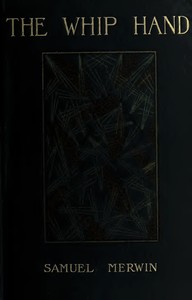
The Whip Hand: A Tale of the Pine Country — Text and Context can be approached with a clearer sense of reading commitment from its source measurements: 65,809 words, 4 hr 47 min estimated reading time, and 9 detected text sections.
The text analysis averages about 15.0 words per sentence, while the detected sections provide another way to judge how the source is divided.
Project Gutenberg metadata also associates the work with “Love stories,” connecting these edition facts with the source record’s subject description.
Explore this collection
These alternatives are selected using recorded categories and estimated reading time.
About 282 minutes
England London Nineteenth Century Fiction
64,816 recorded words. 5 minutes difference from this book's estimate.
View Gutenberg source #55312About 276 minutes
England London Nineteenth Century Fiction
63,480 recorded words. 11 minutes difference from this book's estimate.
View Gutenberg source #54771About 301 minutes
England London Nineteenth Century Fiction
69,122 recorded words. 14 minutes difference from this book's estimate.
View Gutenberg source #55313Search stored excerpts and compare books → Choose by your preferences →
Choices use stored catalog measurements. Estimates vary with reading speed. A shared category is a catalog label, not a claim that two books have the same argument or literary quality.
Search reads excerpt text stored with this catalog and links to its associated Gutenberg record. The connection is stored in the site database; this tool does not recheck that every excerpt is word-for-word identical to that external record. Excerpt search does not cover every chapter and does not verify historical publication dates.
Catalog snapshot checked: 2026-09-25. Coverage: 94 public books, 94 available source excerpts.
Read the complete public-domain text at its original source.
Read on Project GutenbergThe novel opens on a thick, wet night along the southwest coast of Lake Michigan, with an Evanston surf-boat crew straining to haul a boat through a mudhole. The driver cracks his whip and swears, the horses plunge forward under the lash, and the men throw themselves on the spokes. This prologue establishes a world where physical effort and command—the whip hand—are literal and immediate. The scene is built around sensory details: the wind, the sand, the spray, the sucking sound of horses' feet. The lighthouse eye gleams red and white. The driver checks his watch: two hours, two miles. Somewhere ahead, a steamer is pounding to pieces on the bar. The reader is dropped into a moment of crisis without explanation, a technique Merwin uses repeatedly to launch chapters and shifts in setting.
The prologue is not merely an atmospheric opening; it is a structural template for the entire novel. Merwin repeatedly begins sections with a character in motion or under pressure, often at night or in uncertain weather. The driver's lantern throws a yellow circle on the ground; later, office lamps and train windows cast similar isolated pools of light. The prologue's focus on a group of men working together against an unseen force—the storm, the bar, the wreck—recurs in scenes of lumber crews, business alliances, and courtroom-like confrontations. The whip itself, literal in the driver's hand, becomes metaphorical in the boardroom. The novel's three books—Beginnings, Pine, Through Fire—mirror the prologue's arc from struggle to uncertain progress to crisis.
The novel's geography is defined by the tension between the lake and the shore, the lumber camps and the city. Characters move by boat, by train, by wagon, often in difficult conditions. The prologue's surf-boat is followed by scenes on the lake, in the pine woods, and in Chicago offices. The crossing from one realm to another is rarely smooth: roads are muddy, trains are delayed, boats are wrecked. This constant physical movement mirrors the economic maneuvering of the plot. Halloran, the protagonist, shuttles between the lumber country and the city, carrying news and orders. The lake itself is a character—unpredictable, dangerous, a source of both livelihood and destruction. Merwin uses the weather to heighten stakes: a storm can delay a shipment or sink a vessel, and the narrative pauses to note the wind and the waves.
Throughout the excerpts, light sources are carefully placed: the lighthouse eye that gleams red and white, the lantern on the driver's arm, the yellow circle on the ground, the office lamps, the train windows. Darkness surrounds these points of illumination, creating a sense of isolation and vulnerability. Characters are often seen in partial light, their faces half-shadowed. The lighthouse is a fixed point in a shifting landscape, but its light alternates colors, suggesting uncertainty. In the office scenes, the light is artificial and confined, contrasting with the open darkness of the lake and the woods. This pattern of light and dark reinforces the novel's themes of knowledge and ignorance, visibility and concealment. Characters operate in the dark—literally and figuratively—until a revelation or a crisis brings a flash of clarity.
Merwin structures scenes around the rhythm of work and waiting. The prologue is all effort: straining, pulling, swearing. Later, Halloran experiences idle mornings in the office, reading newspapers, waiting for news. The lumber trade involves periods of frantic activity followed by lulls. The narrative mirrors this rhythm, alternating between action-packed set pieces and quieter moments of reflection or conversation. The waiting is not empty; it is filled with rumor, speculation, and the reading of newspapers. Characters learn of events secondhand—a fight on the Board of Trade, a man named Le Duc cornering corn. These interludes build tension and allow the reader to piece together the larger economic battle. The novel's pacing thus reflects the actual tempo of business in the early twentieth century: bursts of activity separated by long stretches of anticipation.
Readers attentive to the novel's structure will notice how Merwin uses weather, light, and physical labor to underscore the economic conflicts at the heart of the story. The whip hand is both a tool and a metaphor, and the novel rewards those who track its appearances across different settings. The excerpts suggest a work that is as interested in the texture of work and the geography of the Great Lakes as in the romance and rivalry of the lumber trade.
I’ve always felt that Samuel Merwin’s The Whip Hand, with its looming lake and stubborn pines, hums a quiet tune of solitary resilience. That same hum lives in Spinster of This Parish — Story, Setting & Ideas, though its weather is interior. Both whisper of lives measured against a vast, unyielding landscape, where a person’s footing is won slowly, day by day. A gentle, abiding companionship.
Your answers remain private and are stored only in this browser.