About 272 minutes
Rejected of Men: A Story of To-day — Reading Companion
England London Nineteenth Century Fiction
62,450 recorded words. 4 minutes difference from this book's estimate.
View Gutenberg source #46841
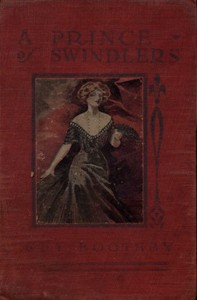
For A Prince of Swindlers — Key Ideas to Explore, the stored edition analysis reports 63,480 words, 4 hr 36 min estimated reading time, and 8 detected text sections.
The text analysis averages about 19.0 words per sentence, while the detected sections provide another way to judge how the source is divided.
Project Gutenberg metadata also associates the work with “Detective and mystery stories,” connecting these edition facts with the source record’s subject description.
Explore this collection
These alternatives are selected using recorded categories and estimated reading time.
About 272 minutes
England London Nineteenth Century Fiction
62,450 recorded words. 4 minutes difference from this book's estimate.
View Gutenberg source #46841About 282 minutes
England London Nineteenth Century Fiction
64,816 recorded words. 6 minutes difference from this book's estimate.
View Gutenberg source #55312About 287 minutes
England London Nineteenth Century Fiction
65,809 recorded words. 11 minutes difference from this book's estimate.
View Gutenberg source #54102Search stored excerpts and compare books → Choose by your preferences →
Choices use stored catalog measurements. Estimates vary with reading speed. A shared category is a catalog label, not a claim that two books have the same argument or literary quality.
Search reads excerpt text stored with this catalog and links to its associated Gutenberg record. The connection is stored in the site database; this tool does not recheck that every excerpt is word-for-word identical to that external record. Excerpt search does not cover every chapter and does not verify historical publication dates.
Catalog snapshot checked: 2026-09-25. Coverage: 94 public books, 94 available source excerpts.
Read the complete public-domain text at its original source.
Read on Project GutenbergThe narrator begins by justifying a confession, claiming he unwittingly introduced a master swindler to London society during a season of grand festivities. He describes himself as a former Viceroy who met the swindler in India, setting up a frame narrative that promises to reveal how he was duped. The tone is defensive, as he insists his innocence while acknowledging his role as the swindler's Deus ex machina.
Later excerpts shift to a detective named Klimo, who interviews a distressed woman about her father's involvement with a criminal society. Klimo's appearance—old-fashioned clothes, skull-cap, smoked glasses—contrasts with his sharp questioning. The woman describes two men, Maguire and Rooney, as leaders of the society, hinting at a transatlantic conspiracy. The narrative thus alternates between the narrator's retrospective account and Klimo's present-tense investigations.
The opening chapter establishes a confessional tone: the narrator insists he must “set myself right with the world” regarding the famous swindles. He admits to having introduced the perpetrator to London society, but claims ignorance of his true nature. The setting is a season of festivity when foreign royalty filled London, making it a target for swindlers. The narrator’s self-defense is laced with irony—he prides himself on avoiding “undesirable acquaintances,” yet he fell into a cleverly contrived trap. The reader is left to question his reliability: is he truly innocent, or is he minimizing his complicity? The excerpts do not reveal the swindler’s identity, but the narrator’s anxiety suggests a personal stake in the story.
In a later scene, the detective Klimo interviews a woman whose father is implicated in a criminal society. Klimo’s appearance is deliberately eccentric: he wears a skull-cap, long grey hair, and smoked spectacles, yet his questions are precise. He asks for photographs and descriptions of the society’s leaders, Maguire and Rooney, and instructs the woman to pack her father’s boxes for a possible escape. His promise to “take this matter up” suggests he operates outside official channels. The woman’s emotional breakdown—she “fell back on her chair crying”—contrasts with Klimo’s calm demeanor. The excerpts do not explain Klimo’s background, but his methodical approach hints at a larger scheme.
The woman reveals she has long suspected her father’s criminal activities. She recalls a time when Maguire and Rooney “almost lived with us,” and her father spent days in a locked room. She admits she is “terribly afraid of committing myself,” indicating she knows more than she says. Her husband is in Marseilles, and she has no other friends. The society’s headquarters are in Chicago, and the leaders are described as “desperate men.” Klimo’s response—to obtain a photograph and wait—implies a patient strategy. The excerpts leave unclear whether the father is a victim or a participant, and the woman’s fear suggests the stakes are high.
The narrative alternates between the narrator’s retrospective account and Klimo’s present-tense investigations. The opening chapter sets up a mystery: who is the swindler, and how did he deceive the narrator? The later excerpts introduce a separate plot involving a criminal society, but the connection to the swindler is not yet clear. The reader must track multiple threads: the narrator’s guilt, Klimo’s case, and the woman’s secret. The excerpts do not resolve these threads, but the tension builds through Klimo’s cryptic instructions and the woman’s hesitation. The story seems to be a puzzle where each piece is revealed slowly.
Readers should pay attention to the framing device: the narrator’s confession may be unreliable, and Klimo’s role may be more central than it first appears. The excerpts offer only fragments of the larger plot, so inferences about the swindler’s identity or the society’s goals should be tentative. The story rewards careful observation of how information is withheld and revealed.
There are days I shelve A Prince of Swindlers and think of Klimo, that patient shadow, trailing a man who vanished into his own legend. The losses stack like misdeeds. But across the aisle sits The Vanishing of Tera — Background and Themes, and I recall how presence, too, can be a kind of disappearing act. Both taught me: we are made of what we withhold.
Answer a few questions and save a private reflection on this device.