About 204 minutes
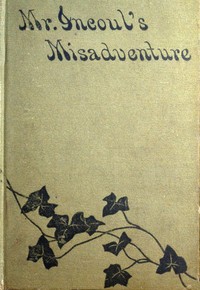
Mr. Incoul's Misadventure — Context and Discussion
England London Nineteenth Century Fiction
46,864 recorded words. 3 minutes difference from this book's estimate.
View Gutenberg source #47061
This digital edition of Jaunty Jock, and Other Stories — Story, Setting & Ideas is described by source-level measurements including 47,442 words, 3 hr 27 min estimated reading time, and 5 detected text sections.
The text analysis averages about 21.5 words per sentence, while the detected sections provide another way to judge how the source is divided.
Project Gutenberg metadata also associates the work with “Short stories,” connecting these edition facts with the source record’s subject description.
Explore this collection
These alternatives are selected using recorded categories and estimated reading time.
About 204 minutes
England London Nineteenth Century Fiction
46,864 recorded words. 3 minutes difference from this book's estimate.
View Gutenberg source #47061About 217 minutes
England London Nineteenth Century Fiction
49,808 recorded words. 10 minutes difference from this book's estimate.
View Gutenberg source #54270About 235 minutes
England London Nineteenth Century Fiction
53,918 recorded words. 28 minutes difference from this book's estimate.
View Gutenberg source #50561Search stored excerpts and compare books → Choose by your preferences →
Choices use stored catalog measurements. Estimates vary with reading speed. A shared category is a catalog label, not a claim that two books have the same argument or literary quality.
Search reads excerpt text stored with this catalog and links to its associated Gutenberg record. The connection is stored in the site database; this tool does not recheck that every excerpt is word-for-word identical to that external record. Excerpt search does not cover every chapter and does not verify historical publication dates.
Catalog snapshot checked: 2026-09-25. Coverage: 94 public books, 94 available source excerpts.
Read the complete public-domain text at its original source.
Read on Project GutenbergThe collection opens with a November haar wrapping Edinburgh, gutters running like mountain burns, and a masked ball where a wigless gentleman yawns through a minuet. Munro’s eye for weather as both atmosphere and agent—the rain that drives women to hug the walls, the wind that threatens to lift petticoats—immediately establishes a world where environment shapes action. The same attention to elemental forces recurs in later stories: the sea that hides Island Faoineas, the gales that dictate sailing routes, the storms that isolate characters. These are not mere backdrops but active presences, as tangible as the stuccoed ceiling that sweats in the ballroom heat.
From the opening paragraph, Munro uses weather to propel both plot and mood. The November rain in the West Bow is not decorative; it forces women onto pattens, makes gutters overflow, and drives men into taverns where they order ale with the phrase “Lord! there’s a sneezer for ye!” The haar—a coastal fog—wraps the city all day, and the wind becomes a hazard of “daring slates and chimney-pots.” Later, in the Hebrides, the captain of a yacht refuses to approach an island because the wind is “going westward with the sun.” Weather is a character with its own will, dictating when characters move, where they go, and whether they can land. Munro’s prose often ties human emotion to atmospheric conditions: the lady who loves trees is drawn to an island precisely when the captain wants to avoid it, and her hand on the helm overrides his professional caution. The weather does not merely set scenes; it creates conflict.
The stories shift between two distinct geographies: the cramped, vertical closes of Edinburgh and the open, deceptive seascapes of the Outer Hebrides. In the first excerpt, the West Bow is a labyrinth of towering “lands” where emptied vessels fall from flats above and women keep close to walls “as luggers scrape the shore of Fife.” The ballroom itself is sweltering, its ceiling sweating, the music flat. Contrast this with the later island sequence: the sea lies “green, gracious, and inviting,” the island’s hill is “luxuriant with hazel,” and the yacht moves freely. Yet the captain’s fear reveals that the island is not a pastoral escape but a place of superstition—the Isle of Illusion. Munro uses these contrasting settings to examine how characters behave when confined by urban artifice versus when confronted with open, ambiguous nature. The movement between them is never simple; the city’s dangers are social, the island’s are psychological.
The name “Isle of Illusion” (Ealan Faoineas) crystallizes a theme that runs through the collection. In the ballroom, masks hide faces; only Lady Charlotte goes unmasked, and the other women bite silken cords to keep their velvet masks in place. A patch on the chin “looked like a defiance.” The wigless gentleman is conspicuous by his lack of disguise. Later, the captain admits the island’s trees are only “what you might be calling a sort of trees,” and the lady’s desire to see them drives the plot. Munro repeatedly presents surfaces that deceive: the island that seems green but is feared, the ball that seems merry but is insipid to the outsider, the captain who claims bravery but refuses to land. The word “seeming” appears in the translation of the island’s name, and the story’s dialogue circles around what is true versus what appears true. This pattern of illusion—social, geographical, psychological—gives the collection a cohesive, questioning tone.
Munro distinguishes characters through their speech patterns. The Edinburgh tavern customers speak in Scots: “Lord! there’s a sneezer for ye!” The captain of the yacht uses a different register, full of hedging and reluctance: “I will not be saying but what there are two or three trees, or maybe more.” His fear is expressed not through direct confession but through evasive phrases and appeals to tradition: “You will not get a man in all the Outer Islands… who would step on Faoineas.” Morar’s wife, by contrast, speaks directly and decisively: “I should love to see it. Are there trees?” Her husband’s dialogue is more analytical, asking “what ails him?” and pressing for explanations. The contrast between the captain’s superstitious caution and the lady’s determined curiosity drives the island episode. Munro uses these vocal differences to create tension without authorial commentary, letting the characters reveal their worldviews through what they say and how they say it.
Readers approaching this collection should attend to the way Munro builds atmosphere through physical detail—the feel of rain, the look of a sweating ceiling, the sound of a reluctant sailor’s voice. The stories reward attention to recurring motifs: masks, weather, islands, and the gap between appearance and reality. Because the excerpts are incomplete, the full arc of each tale remains unknown, but the patterns visible here suggest a writer deeply interested in how place and perception shape human action.
I finished Jaunty Jock on a grey afternoon, and the way Munro keeps the Hebrides hovering behind Edinburgh’s stone made me think of Margaret’s quieter intrusions. There’s that same slippage between what’s solid and what’s merely imagined, a fog rolling in from the sea. It reminded me of The Intrusions of Peggy — Story, Setting & Ideas, where strangers unsettle a room the way weather unsettles a shore. I simply sat with that thought a while.
A brief reflection can help important ideas stay with you longer.