About 162 minutes
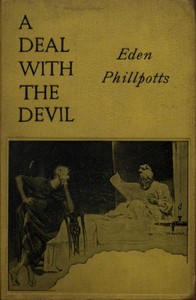
A Deal with the Devil — A Reader’s Guide
England London Nineteenth Century Fiction
37,175 recorded words. 8 minutes difference from this book's estimate.
View Gutenberg source #47246

The source record for Foxglove Manor: A Novel, Volume 3 (of 3) — Inside the Classic measures this digital text at 35,224 words, 2 hr 34 min estimated reading time, and 5 detected text sections.
The text analysis averages about 14.0 words per sentence, while the detected sections provide another way to judge how the source is divided.
Project Gutenberg metadata also associates the work with “England -- Social life and customs -- 19th century -- Fiction,” connecting these edition facts with the source record’s subject description.
Explore this collection
These alternatives are selected using recorded categories and estimated reading time.
About 162 minutes
England London Nineteenth Century Fiction
37,175 recorded words. 8 minutes difference from this book's estimate.
View Gutenberg source #47246About 137 minutes
England London Nineteenth Century Fiction
31,395 recorded words. 17 minutes difference from this book's estimate.
View Gutenberg source #51928About 171 minutes
England London Nineteenth Century Fiction
39,255 recorded words. 17 minutes difference from this book's estimate.
View Gutenberg source #51944Search stored excerpts and compare books → Choose by your preferences →
Choices use stored catalog measurements. Estimates vary with reading speed. A shared category is a catalog label, not a claim that two books have the same argument or literary quality.
Search reads excerpt text stored with this catalog and links to its associated Gutenberg record. The connection is stored in the site database; this tool does not recheck that every excerpt is word-for-word identical to that external record. Excerpt search does not cover every chapter and does not verify historical publication dates.
Catalog snapshot checked: 2026-09-25. Coverage: 94 public books, 94 available source excerpts.
Read the complete public-domain text at its original source.
Read on Project GutenbergThe third volume of Foxglove Manor opens with a notebook entry dated Sunday, September 19, in which the narrator describes his wife Ellen going to church while he stays home. He has discovered what he calls a “jealousy” in her toward the clergyman, Mr. Santley. The entry recounts how he told Ellen about witnessing an embrace between Santley and Miss Dove in the woodland, deliberately omitting the lovers’ references to her. This diary format, used in several chapters, gives the reader direct access to the narrator’s calculated thoughts and growing suspicion.
The narrator’s notebook entries, marked by precise dates and a confessional tone, allow the reader to trace his mounting distrust. In the opening chapter, he describes telling Ellen about Santley and Miss Dove “while beating the shell of my second egg at breakfast,” a domestic detail that contrasts with the gravity of his revelation. He notes her change of color and forced laugh, cataloging her reactions as evidence. Later, in Chapter XXXIII, the notebook reappears, and by Chapter XXXIV it is used to plot a trap: “baiting a mouse-trap.” This recurring device structures the narrative around the narrator’s perspective, making his interpretations central to the story’s tension.
In a later excerpt, the narrator spies on Ellen and Santley through a gap in the drawing-room curtains. He sees Santley on his knees, declaring, “I have thought it all over; I have struggled and struggled, but it is in vain.” The minister calls the narrator a “heretic—an atheist” and urges Ellen to leave him. Ellen repeatedly says “Go, go!” and “I will never speak to you again.” The narrator watches her afterward, noting how she smooths her hair and poses with a book, and describes himself as “diabolically cool.” This scene, rendered entirely through the narrator’s surveillance, heightens the ambiguity of Ellen’s feelings.
Throughout the excerpts, Ellen’s behavior is observed but not explained from her own perspective. At breakfast she is “irritable and absent-minded,” and she hesitates before going to church. During Santley’s plea, she moans “Go, go!” and draws back from his kiss. Yet afterward, the narrator sees her bathe her face, adjust her dress, and look at herself in the mirror with “unusual brightness.” These details, filtered through the narrator’s jealous gaze, leave her motives unclear. The reader must weigh whether she is resisting Santley or merely cautious about being discovered.
The narrator repeatedly describes his own composure. After witnessing the embrace in the drawing-room, he writes, “I was diabolically cool; so cool that I could have killed her just then in cold blood.” Instead of confronting them immediately, he chooses to enter through the hall door, pretending ignorance. Earlier, he concealed part of what he knew about the lovers’ conversation. This pattern of deliberate withholding and strategic revelation suggests a methodical, perhaps vengeful, approach. The notebook itself becomes a tool for controlling information, as the narrator decides what to record and what to omit.
The excerpts use setting to amplify emotional tension. The woodland where the narrator first spies on Santley and Miss Dove is described as “primaeval,” contrasting with the civilized breakfast table where he later reports it. The drawing-room scene is framed by the storm outside: “the loud crying of the wind around me.” The narrator creeps along the terrace in darkness, peering through a small gap in the curtains. These details ground the psychological drama in a physical world that mirrors the characters’ inner turmoil.
As you read this final volume, pay close attention to the shifts between the notebook entries and the third-person narration. The narrator’s voice is the primary lens, but his reliability is undercut by his admitted jealousy and calculated omissions. Consider how Buchanan uses the diary form to create intimacy while also raising doubts about the truth of what is reported.
There’s something achingly familiar about that jealous husband’s notebook—how vigilance can curdle into a kind of quiet loneliness. It reminded me, strangely, of the gentler observations in The Observations of Henry Illustrated — Themes and Context, where watching becomes a way of loving rather than losing. Both made me think of how we narrate our own hearts to ourselves, page by page, hoping someone might overhear.
Build a private reading journal entry for this title.