About 384 minutes
The Return of the O'Mahony: A Novel — Inside the Classic
Time Travel Speculative Futures
88,298 recorded words. 5 minutes difference from this book's estimate.
View Gutenberg source #54900
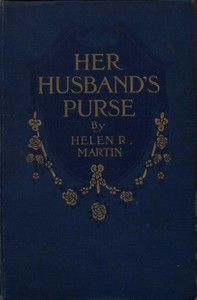
For Her Husband's Purse — A Reader’s Guide, the stored edition analysis reports 89,397 words, 6 hr 29 min estimated reading time, and 8 detected text sections.
The text analysis averages about 17.0 words per sentence, while the detected sections provide another way to judge how the source is divided.
Project Gutenberg metadata also associates the work with “Husband and wife -- Fiction,” connecting these edition facts with the source record’s subject description.
Explore this collection
These alternatives are selected using recorded categories and estimated reading time.
About 384 minutes
Time Travel Speculative Futures
88,298 recorded words. 5 minutes difference from this book's estimate.
View Gutenberg source #54900About 370 minutes
Time Travel Speculative Futures
84,977 recorded words. 19 minutes difference from this book's estimate.
View Gutenberg source #49713About 416 minutes
Time Travel Speculative Futures
95,549 recorded words. 27 minutes difference from this book's estimate.
View Gutenberg source #48937Search stored excerpts and compare books → Choose by your preferences →
Choices use stored catalog measurements. Estimates vary with reading speed. A shared category is a catalog label, not a claim that two books have the same argument or literary quality.
Search reads excerpt text stored with this catalog and links to its associated Gutenberg record. The connection is stored in the site database; this tool does not recheck that every excerpt is word-for-word identical to that external record. Excerpt search does not cover every chapter and does not verify historical publication dates.
Catalog snapshot checked: 2026-09-25. Coverage: 94 public books, 94 available source excerpts.
Read the complete public-domain text at its original source.
Read on Project GutenbergThe novel opens with a jolt of comic indignation: the two maiden sisters of Daniel Leitzel learn of his betrothal through newspaper headlines. The narrator’s voice is arch and judgmental, describing the sisters as “appalled, confounded” and their sitting-room as “elaborately furnished and quite hideous.” This initial tone—satirical, almost gossipy—establishes a world where family opinion and public print carry near-biblical authority. Yet the pace soon shifts. A later excerpt moves into a drawing-room debate on women’s economic dependence, where characters quote Charlotte Perkins Gilman and Bernard Shaw. The language becomes more abstract, the sentences longer, and the rhythm more argumentative. The contrast between the sisters’ provincial panic and the intellectual sparring of Margaret and Miss Hamilton suggests a novel that oscillates between social comedy and serious feminist dialogue.
The narrator’s voice is anything but neutral. Early on, the sisters are described with a mixture of scorn and pity: Jennie is “a stern and uncompromising spinster of sixty,” and their worldview is such that the local newspaper is “scarcely less authoritative … than the Bible itself.” The free indirect style lets the reader hear their dialect (“To think he’d leave us learn about it in the newspapers yet”) while the narrator’s own polished commentary undercuts them. This double-voiced technique—mocking yet intimate—gives the opening a brisk, satirical energy. Later, when the scene shifts to a discussion of Mrs. Humphry Ward and the feminist movement, the narrator recedes, allowing characters to speak in longer, more reasoned paragraphs. The voice becomes less intrusive, more reportorial. The shift is not just in subject but in narrative posture: from a storyteller who winks at the reader to one who steps back and lets ideas collide.
The novel’s pacing is uneven in a deliberate way. The opening chapter moves quickly, propelled by exclamations, short bursts of dialogue, and the sisters’ frantic reactions. Sentences are clipped: “If the Intelligencer said so, it seemed useless to try to stop it.” The effect is breathless, almost farcical. In contrast, the later excerpt featuring Miss Hamilton and Margaret unfolds in a more measured, discursive rhythm. Characters trade opinions on economic dependency and spiritual freedom in paragraphs that read like essays. The tempo slows, the stakes shift from social embarrassment to ideological conflict. This change in pace mirrors the novel’s thematic tension between the insular Pennsylvania Dutch community and the broader currents of early twentieth-century feminism. Readers should note how Martin uses speed to signal genre: the fast, comic opening belongs to domestic satire; the slower, argumentative passages belong to the novel of ideas.
Certain details recur with pointed effect. The newspaper—the New Munich Evening Intelligencer—appears first as a source of shocking news, then as a symbol of public opinion. The sisters treat its headlines as fate. Later, the word “benefactor” is read aloud from a dictionary, sparking a different kind of authority: the dictionary’s definition becomes a tool for redefining relationships. Another repeated motif is the phrase “get off of men’s backs,” attributed to Charlotte Perkins Gilman, which appears in the feminist debate. These recurring elements—print media, definitions, economic metaphors—anchor the novel’s concerns with language and power. They are not mere decoration; they structure the argument. The sisters’ reliance on the newspaper contrasts with the younger women’s reliance on books and lectures. The shift from provincial gossip to intellectual discourse is encoded in these repeated objects and phrases.
Because the excerpts are incomplete, the full arc of the novel remains uncertain. What is clear is that Martin uses narrative voice and pacing as tools of social commentary. Readers attentive to these shifts will notice how the novel moves between comedy and earnest debate, between the claustrophobic world of Main Street and the wider conversations of the suffrage era. The language itself—whether in dialect or in argument—carries the weight of the novel’s inquiry into freedom, dependence, and the shape of a modern marriage.
Reading about Helen Martin’s provincial voices, I recalled my grandmother’s clipped judgments at the kitchen table—how silence could argue louder than words. That same tension lingers in Fifteen Hundred Miles an Hour — Context and Discussion, whose pacing left me breathless in a similar, unsettling way, as if time itself were holding its breath. Funny how old books keep whispering our own stories back.
Your answers remain private and are stored only in this browser.