About 384 minutes
The Return of the O'Mahony: A Novel — Inside the Classic
Time Travel Speculative Futures
88,298 recorded words. 14 minutes difference from this book's estimate.
View Gutenberg source #54900
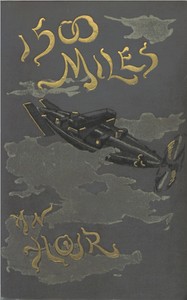
This digital edition of Fifteen Hundred Miles an Hour — Context and Discussion is described by source-level measurements including 84,977 words, 6 hr 10 min estimated reading time, and 7 detected text sections.
The text analysis averages about 22.4 words per sentence, while the detected sections provide another way to judge how the source is divided.
Project Gutenberg metadata also associates the work with “Science fiction, English,” connecting these edition facts with the source record’s subject description.
Explore this collection
These alternatives are selected using recorded categories and estimated reading time.
About 384 minutes
Time Travel Speculative Futures
88,298 recorded words. 14 minutes difference from this book's estimate.
View Gutenberg source #54900About 389 minutes
Time Travel Speculative Futures
89,397 recorded words. 19 minutes difference from this book's estimate.
View Gutenberg source #55298About 325 minutes
Time Travel Speculative Futures
74,741 recorded words. 45 minutes difference from this book's estimate.
View Gutenberg source #50203Search stored excerpts and compare books → Choose by your preferences →
Choices use stored catalog measurements. Estimates vary with reading speed. A shared category is a catalog label, not a claim that two books have the same argument or literary quality.
Search reads excerpt text stored with this catalog and links to its associated Gutenberg record. The connection is stored in the site database; this tool does not recheck that every excerpt is word-for-word identical to that external record. Excerpt search does not cover every chapter and does not verify historical publication dates.
Catalog snapshot checked: 2026-09-25. Coverage: 94 public books, 94 available source excerpts.
Read the complete public-domain text at its original source.
Read on Project GutenbergCharles Dixon's Fifteen Hundred Miles an Hour (1895) opens with a frame narrative: the editor recounts finding a manuscript during a scientific expedition in the Sahara, near Biskra, during a sandstorm. This device establishes a tone of documentary authenticity before the story proper begins. The narrative then shifts to a first-person account of a voyage to Mars aboard the spaceship Sirius. The prose moves between measured, almost technical descriptions of space travel and more melodramatic episodes on Mars, where the pacing accelerates into scenes of captivity, rivalry, and execution. The language is consistently formal, with occasional bursts of heightened emotion, particularly in moments of crisis.
The book's opening establishes a layered narrative voice. The editor's introduction uses a detached, scholarly tone: “I owe it to the world to state exactly how these papers came into my hands.” This claim to veracity is reinforced by specific geographical details—the oasis of Biskra, the Great Desert—and a vivid description of an approaching sandstorm: “the heavens up to now were an intensely brilliant blue, but a dark cloud far away over the distant desert could be seen rapidly increasing in size.” The storm is rendered with sensory precision: “the air became almost as dark as midnight, full of fine blinding sand.” Once the manuscript takes over, the first-person narrator adopts a similarly factual register for the voyage, but the voice becomes more agitated during the Martian episodes. The shift in voice from editor to protagonist is marked by a change in pacing: the editor's prose is deliberate and observational, while the protagonist's narrative quickens with dialogue and exclamation.
A key passage—the execution on the crag Remagaloth—demonstrates Dixon's control of pacing. The scene begins with a slow, panoramic description: “We stood upon the crag Remagaloth, a jutting rock which arched and overhung in awful grandeur a vast lake of seething molten fire!” The prose lingers on the visual details: “here and there a tongue of flame shot upwards, and then sank again.” Then the pace tightens as the commander announces the death sentence: “Men of Ramos, it is here that by the King's commands ye are to die.” Dialogue accelerates the rhythm, with Perodii's taunts and Graham's retort: “Coward! Breathe not her dear name to me.” The narrator's internal reflections—“We thought with horror of the death before us”—slow the tempo again, creating a seesaw effect between action and contemplation. This alternation sustains tension without resolving it.
Throughout the excerpts, Dixon relies on recurring sensory motifs. Heat and light dominate: the desert sun “shone paler and paler,” the Martian lake is “seething molten fire,” and the reflection “lit up the surrounding rocks.” Darkness and shadow are equally prominent: “a darkness began to creep over the earth” during the sandstorm, and later “the plain of desolation below was fast cloaking its horrors in the gloom of night.” The contrast between the pale star of Earth and the fiery lake below reinforces the theme of distance and loss. The narrator's yearning gaze—“our eyes looked out with yearning love across the realms of space towards her, our home!”—echoes the earlier desert isolation. These repeated images of heat, light, and darkness create a cohesive sensory environment that anchors the speculative elements in physical experience.
Readers attentive to narrative voice will notice how the editor's framing persona recedes once the Martian story begins, only to reassert itself in the final chapter's “Last Words from Yonder.” The shift from measured reportage to heightened drama is not always seamless, but it reflects the period's appetite for both scientific plausibility and romantic adventure. Pay particular attention to how Dixon uses the spaceship Sirius as a symbol of human ambition and vulnerability—especially in the execution scene, where it becomes a death trap poised over a lake of fire.
I kept thinking about the desert manuscript in Dixon’s frame, how a discovery can feel like a secret handed to you. That quiet weight lingered even after the Mars voyage’s noise faded. It reminded me of Black is White — Key Ideas to Explore, where masking and revealing feel similarly intimate, almost like reading a diary left open by accident.
Use these questions to collect your thoughts before moving on.