About 325 minutes
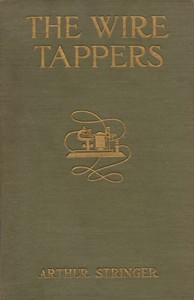
The Wire Tappers — Reading Notes
Time Travel Speculative Futures
74,741 recorded words. 8 minutes difference from this book's estimate.
View Gutenberg source #50203
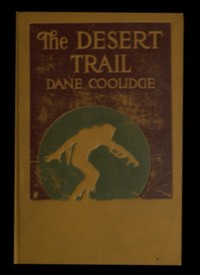
The catalog record for The Desert Trail — A Closer Reading provides practical reading context through 72,782 words, 5 hr 17 min estimated reading time, and 7 detected text sections.
The text analysis averages about 17.7 words per sentence, while the detected sections provide another way to judge how the source is divided.
Project Gutenberg metadata also associates the work with “Western stories,” connecting these edition facts with the source record’s subject description.
Explore this collection
These alternatives are selected using recorded categories and estimated reading time.
About 325 minutes
Time Travel Speculative Futures
74,741 recorded words. 8 minutes difference from this book's estimate.
View Gutenberg source #50203About 370 minutes
Time Travel Speculative Futures
84,977 recorded words. 53 minutes difference from this book's estimate.
View Gutenberg source #49713About 384 minutes
Time Travel Speculative Futures
88,298 recorded words. 67 minutes difference from this book's estimate.
View Gutenberg source #54900Search stored excerpts and compare books → Choose by your preferences →
Choices use stored catalog measurements. Estimates vary with reading speed. A shared category is a catalog label, not a claim that two books have the same argument or literary quality.
Search reads excerpt text stored with this catalog and links to its associated Gutenberg record. The connection is stored in the site database; this tool does not recheck that every excerpt is word-for-word identical to that external record. Excerpt search does not cover every chapter and does not verify historical publication dates.
Catalog snapshot checked: 2026-09-25. Coverage: 94 public books, 94 available source excerpts.
Read the complete public-domain text at its original source.
Read on Project GutenbergThe opening pages of The Desert Trail do not begin with a lone rider or a gold strike but with a panoramic description of Gadsden, Arizona, as a city of men driven from mines and ranches by war in Mexico. The catalog subjects list “Western stories” and “Gold mines and mining,” yet the first chapter lingers on the social texture of a border town: “idlers” gathered by class—Mexicans, cowboys, mining men, refugees—and women who “walked fast, looking neither to the right nor to the left.” The gold mine that eventually appears is less a catalyst than a backdrop for personal tensions.
The catalog subject “Western stories” might suggest open range and cattle drives, but Coolidge’s Gadsden is a dense, urban border crossing. The main street “ran from the railroad straight to the south until, at a line, it stopped short and was lost in the desert.” That line is the U.S.–Mexico border, and the narrator explicitly states that the difference is “not in the land, but in the government.” The crowd includes “somber-eyed refugees and soldiers of fortune from Mexico,” and the war in Sonora is the engine that has glutted the town with men. The Western genre here is inflected by revolutionary politics and international tension, not just frontier individualism.
Though “Gold mines and mining” is a catalog subject, the excerpts treat the mine as a practical necessity rather than a dramatic goal. When Bud Hooker proposes opening the mine, he says “we might as well get out some ore, if it’s only for a grub-stake.” The gold itself is described in a single paragraph: a “yellow film” in a pan, “a dollar to the pan easy.” The emotional weight falls elsewhere—on Phil De Lancey’s distraction by Gracia Aragon, whose hair is “worth more than this golden dross.” The mine is a setting for character interaction, not the plot’s engine.
The excerpts introduce Ignacio, a Yaqui Indian who carries a Mauser rifle, wears cartridge belts, and has a “red ribbon of his people” around his hat. Bud speculates that Ignacio may be hunting the man who had him deported. The Indian’s movements are mysterious; he “maintained a certain mystery” about his journey. When asked if he has killed anyone, he answers “Not yet!” without smiling. This subplot—rooted in the real history of Yaqui deportation from Sonora—is barely hinted at in the catalog subjects but gives the story a specific, uneasy political dimension that a generic “Western” label obscures.
Readers approaching The Desert Trail as a straightforward gold-rush Western will find its opening chapters more concerned with border politics and displaced populations. The catalog subjects capture only the broadest contours; the excerpts suggest a story in which the mine is a stage for personal and cultural collisions. Pay attention to the minor characters—especially Ignacio—whose silences may carry as much weight as the gold in the pan.
Reading the note on The Desert Trail, I kept thinking about Gadsden’s crowded border streets, all those displaced lives waiting at the edge of a story. It reminded me of that older sense of quiet searching I found in The Gates Ajar — Background and Themes, where comfort comes not from movement but from simply sitting with what remains. Both feel like holding a photograph that’s slightly out of focus.
Your answers remain private and are stored only in this browser.