
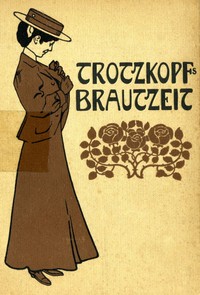
Trotzkopf's Brautzeit by Else Wildhagen
Originally published in 1905, 'Trotzkopf's Brautzeit' (which translates to 'Stubbornhead's Engagement Time') picks up the story of Ilse Macket, the famously willful heroine from Else Wildhagen's earlier novels. We find Ilse no longer a rebellious schoolgirl, but a young woman on the brink of marriage.
The Story
Ilse is engaged to a man named Leo, and society expects her to smoothly transition into the role of a dutiful fiancée and future wife. But old habits—and a strong personality—die hard. The book follows Ilse through the period of her engagement, a time meant for quiet preparation, but which she fills with small acts of independence and self-discovery. It's not a plot of grand adventure, but of internal and social friction. We see her clash with conventions, struggle with the expectations placed on a bride-to-be, and constantly question what she truly wants from her life and partnership. The central question is whether her fiery spirit, which defined her youth, can survive within the structured confines of adult life and marriage in early 20th-century Germany.
Why You Should Read It
What surprised me is how current Ilse's dilemmas feel. While the setting is historical, her fight to be seen as a complete person—not just a wife-in-training—rings true. Wildhagen doesn't make her a perfect feminist icon by today's standards, but she gives her a real, grating authenticity. Ilse is often difficult, sometimes wrong, but always compelling. You root for her to find a way to be happy without disappearing. Reading this is like uncovering a conversation about women's autonomy that was happening much earlier than we often assume. It’s a character study that offers a quiet, nuanced look at the pressure to conform.
Final Verdict
This book is perfect for readers who love historical fiction with strong, complex female leads. If you enjoyed the psychological depth in novels like 'The Age of Innocence' or the spirited heroines of L.M. Montgomery, you'll find a kindred spirit in Ilse. It’s also a gem for anyone interested in the social history of women and marriage. Fair warning: it's a product of its time in pacing and style, so it unfolds gently. But if you're in the mood for a thoughtful, character-driven story about a woman trying to write her own rules, 'Trotzkopf's Brautzeit' is a captivating and insightful read from a forgotten chapter of popular fiction.
There are no legal restrictions on this material. You do not need permission to reproduce this work.
Jennifer Davis
1 year agoThe analytical framework presented is both innovative and robust.
George Perez
4 months agoExtremely helpful for my current research project.
Patricia Thompson
11 months agoI decided to give this a try based on a colleague's recommendation, the clarity of the writing makes even the most dense sections readable. Finally, a source that prioritizes accuracy over hype.
Christopher Martin
1 year agoI stumbled upon this title during my weekend research and the breakdown of complex theories into digestible segments is masterfully done. A rare gem in a sea of mediocre content.




Richard Gonzalez
1 year agoLooking at the bibliography alone, the nuanced approach to the central theme was better than I expected. Top-tier content that deserves more recognition.