
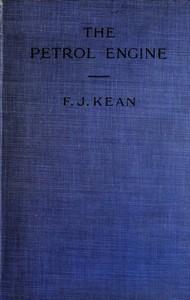
The Petrol Engine by Francis John Kean
If you picked up a book called 'The Petrol Engine' expecting a dry technical manual, you'd be in for a shock. Francis John Kean's novel is a vibrant, character-driven story set against the smoky backdrop of the late 19th century Industrial Revolution.
The Story
We follow Henry Croft, a gifted but socially awkward engineer obsessed with building a lighter, more powerful engine that runs on petrol, not steam. His workshop is his sanctuary. When he finally achieves a breakthrough, he attracts two very different kinds of attention. The first is from a forward-thinking investor who sees the future. The second, and far more dangerous, is from the established 'Steam Barons'—wealthy industrialists whose fortunes are tied to coal and railways. They launch a covert war to discredit, steal, or destroy Henry's work. The plot weaves between the tense, soot-filled world of factories and the elegant, cutthroat drawing rooms where business deals are really battles.
Why You Should Read It
What makes this book special is how it humanizes invention. Henry isn't a perfect genius; he's prickly, obsessive, and struggles to connect with people. His relationship with his daughter, who believes in him when no one else does, is the heart of the story. Kean makes you feel the weight of each bolt tightened, the frustration of every failed test, and the electric thrill of a prototype finally roaring to life. It's a powerful reminder that behind every world-changing machine, there's a person with dreams, flaws, and a lot to lose.
Final Verdict
This is a perfect pick for anyone who loves historical fiction with a strong technical puzzle at its core. If you enjoyed the determined innovation in 'The Martian' but prefer top hats to space suits, you'll love this. It's also great for readers who like stories about underdogs fighting corrupt systems. You'll come away with a new appreciation for the engines in our lives and the quiet revolutions that built our modern world.
There are no legal restrictions on this material. You do not need permission to reproduce this work.
Elizabeth Johnson
4 months agoHaving followed this topic for years, I can say that the clarity of the writing makes even the most dense sections readable. Highly recommended for those seeking credible information.
Karen Wilson
1 year agoA sophisticated analysis that fills a gap in the literature.
Donald Martinez
1 year agoA brilliant read that I finished in one sitting.
Paul Lopez
11 months agoVery satisfied with the depth of this material.








Sarah Lee
7 months agoThe author provides a very nuanced critique of current methodologies.