
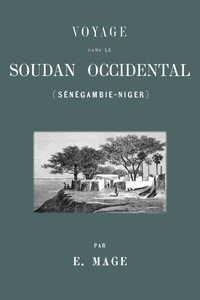
Voyage dans le Soudan occidental (Sénégambie-Niger) by E. Mage
In the 1860s, a young French naval officer named Eugène Mage was sent on a daring mission deep into West Africa. His goal was to travel from Senegal to the Niger River, making contact and treaties with local powers, most notably the expanding Tukulor Empire led by El Hadj Umar Tall. The book is his detailed journal of that multi-year expedition.
The Story
This isn't a novel with a single villain. The plot is the journey itself. Mage and his small team face everything from brutal climates and disease to the immense logistical nightmare of moving through unfamiliar land. The real story, though, is human. He describes vibrant markets, complex societies, and stunning landscapes no European had written about before. A huge part of the narrative focuses on his long, tense stay in the Tukulor court. He's part diplomat, part hostage, always trying to advance French interests while being carefully watched. You feel his frustration during months of stalled negotiations and his constant alertness to danger.
Why You Should Read It
I was blown away by the sheer immediacy of it. Mage doesn't write like a distant academic. He writes as a man trying to survive and do his job. You get his awe at seeing the Niger River for the first time, his sharp observations on daily life, and his very real fears. He doesn't cast himself as a hero; he often seems in over his head, which makes him relatable. What stuck with me most were the portraits of the people he met—leaders, warriors, merchants, farmers. They aren't just background characters; they're fully realized individuals with their own goals and intelligence. It completely shatters any simplistic colonial narrative.
Final Verdict
Perfect for history buffs who want to move beyond textbooks and into the diary of someone who was there. It's also great for travel writing fans who crave authentic, gritty adventure stories. A word of caution: it's a product of its time, so some attitudes are dated. But if you read it as the fascinating, personal document it is—a snapshot of a monumental cultural collision—it's absolutely absorbing. This is for the reader who wants to explore a pivotal moment in history through the eyes of a sharp, if imperfect, observer.
This masterpiece is free from copyright limitations. Knowledge should be free and accessible.
Anthony Wilson
6 months agoClear and concise.
William Garcia
9 months agoI found the data interpretation to be highly professional and unbiased.