
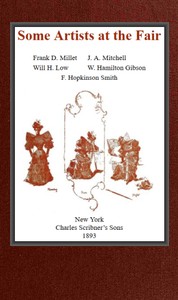
Some Artists at the Fair by Millet, Gibson, Low, Mitchell, and Smith
Published in 1895, Some Artists at the Fair is Francis Hopkinson Smith's affectionate and observant look at the creative community that orbited the colossal World's Columbian Exposition in Chicago. Smith, a successful engineer, painter, and writer himself, had a foot in both the practical and artistic worlds, giving him a unique perspective.
The Story
Don't go in expecting a single, driving plot. Think of it more like having coffee with a wonderfully chatty friend who knew everyone. Smith introduces us to a handful of artists—based on real figures like painters John Singer Sargent and Walter Shirlaw, illustrator Charles Dana Gibson, and sculptor Augustus Saint-Gaudens—though he uses fictional names. We follow their daily routines: setting up studios in the fair's temporary buildings, negotiating prices for portraits of wealthy visitors, sketching the exotic exhibits and crowds, and grappling with the sheer scale of the "White City." The "story" is in these small moments: an artist trying to paint a serene landscape while a noisy steam engine puffs nearby, or the quiet camaraderie of creators sharing a meal after a long day. The fair itself is the main character—a dazzling, sometimes exhausting backdrop of human achievement against which these individuals practice their timeless craft.
Why You Should Read It
What I love most about this book is how immediate it feels. Smith isn't writing from a distance; he was in the thick of it. You get the grit and sawdust behind the fair's gleaming plaster facades. His portraits of the artists are warm and witty—they're portrayed as skilled professionals, not tortured souls. He captures their pride, their frustrations with fussy patrons, and their dry humor. The book beautifully explores a tension we still understand today: the struggle to make meaningful art in a world obsessed with commerce and spectacle. It’s a celebration of the working artist, long before the term "starving artist" became a cliché.
Final Verdict
This is a perfect little find for readers who enjoy historical slice-of-life stories and behind-the-scenes glimpses. If you're fascinated by the Gilded Age, the World's Fairs, or the history of American art, you'll get a fresh, ground-level view here. It's also great for anyone who just likes well-written, observational prose about interesting people in a remarkable setting. It’s not a thriller, but a calm, insightful stroll through a lost moment in time, guided by a sharp and sympathetic observer. A real treat for the curious reader.
This is a copyright-free edition. It is available for public use and education.
Patricia Davis
9 months agoThe layout of the digital version made it easy to start immediately, the evidence-based approach makes it a very credible source of information. Thanks for making such a high-quality version available.
Richard Thompson
6 months agoAfter a thorough walkthrough of the table of contents, the visual layout and supporting data make the reading experience very smooth. I feel much more confident in my knowledge after finishing this.
Thomas Lee
11 months agoThe digital index is well-organized, making research much faster.
Donald Williams
8 months agoI stumbled upon this title during my weekend research and the level of detail in the second half of the book is truly impressive. I'm genuinely impressed by the quality of this digital edition.

Michael Smith
9 months agoI started reading this with a critical mind, the step-by-step breakdown of the methodology is extremely helpful for students. I’ll definitely be revisiting some of these chapters again soon.