
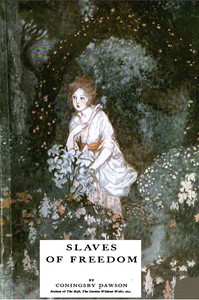
Slaves of Freedom by Coningsby Dawson
Coningsby Dawson's Slaves of Freedom is a novel that pulls you into the quiet, often overlooked chaos that follows a world war. Published in 1919, it feels like it was written in the shaky breath just after the last gun fell silent.
The Story
The book follows a young British soldier returning home after the Great War. On the surface, he's a hero. But inside, he's carrying a weight his family and friends can't see. The story walks with him as he tries to pick up the pieces of his old life—reconnecting with his sweetheart, dealing with family expectations, and facing a society eager to celebrate victory but uncomfortable with the scars it left behind. The central tension isn't about fighting enemies abroad; it's about fighting the disconnect within himself and with everyone around him. Can the man he became in the trenches ever fit into the peaceful world he fought to save?
Why You Should Read It
What grabbed me was how personal it feels. Dawson served as a soldier himself, and that experience bleeds into every page. It's not a flashy war novel. It's a deep, sometimes aching look at the cost of survival. The characters feel real—flawed, confused, and trying their best. You feel the protagonist's frustration when a well-meaning comment misses the mark entirely, and his loneliness in a crowded room. It makes you think about all the silent battles people fight long after the official one is over. In a way, it's a story about PTSD before we had a name for it, written with raw honesty.
Final Verdict
This book is perfect for readers who love character-driven historical fiction. If you enjoyed the emotional depth of books like All Quiet on the Western Front but wanted to see what happened after the soldiers came home, this is your next read. It's also great for anyone interested in the human side of history—the lived experience, not just the dates and battles. Fair warning: it's not a light, happy tale. It's thoughtful, sometimes heavy, but incredibly moving. A powerful reminder that sometimes, the hardest fight begins when the war ends.
The copyright for this book has expired, making it public property. Access is open to everyone around the world.
Robert Wilson
11 months agoI didn't expect much, but it manages to explain difficult concepts in plain English. Highly recommended.
George Robinson
3 months agoUsed this for my thesis, incredibly useful.
Kevin Taylor
1 year agoPerfect.
Edward Johnson
1 year agoFinally found time to read this!
Karen Smith
1 month agoThe analytical framework presented is both innovative and robust.