
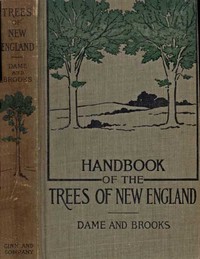
Handbook of the Trees of New England by Lorin Low Dame and Henry M. Brooks
First published in the late 19th century, Handbook of the Trees of New England is exactly what it says on the tin. It's a field guide. But calling it just a guide feels like calling a classic map 'just directions.' Authors Lorin Low Dame and Henry M. Brooks set out to catalog and describe every tree species you could find in the New England woods, from the towering white pines to the humble shrubs. They organized it clearly, with keys to help you identify a tree by its leaves, bark, flowers, and fruit. Each entry gives you the facts: where it grows, what it looks like through the seasons, and even some of its practical uses.
Why You Should Read It
This is where the magic happens. Reading this book today isn't just about learning to tell a beech from a birch (though you will). It's a step back in time. You get the sense of wonder these naturalists felt as they tried to make sense of their world. Their detailed observations—written without modern cameras or apps—force you to slow down and look closely. You start to see trees not as a green backdrop, but as individual characters with unique stories. The book transforms your perspective. That patch of woods you drive by? Suddenly, it's a community of sugar maples, ironwood, and hemlock, each playing a part. It fosters a deep, quiet connection to the landscape that feels genuinely rewarding.
Final Verdict
This book is a perfect match for a specific kind of reader. If you love history, local walks, or just learning the names of things around you, you'll find a friend in these pages. It's ideal for the naturally curious person who wants to deepen their daily walks, for gardeners and birdwatchers looking to understand the whole ecosystem, and for anyone who appreciates the charm of old, practical knowledge. It's not a fast-paced novel, but a patient companion. Keep a copy in your car or by the back door. Next time you're outside, you'll have over a century of careful observation right in your pocket, ready to make the familiar world wonderfully new again.
This is a copyright-free edition. It serves as a testament to our shared literary heritage.
David Jackson
3 months agoUnlike many other resources I've purchased before, the way it handles controversial points with balance is quite professional. I'll be citing this in my upcoming project.
Margaret Jackson
2 months agoAfter spending a few days with this digital edition, the historical context mentioned in the early chapters is quite enlightening. I'm genuinely impressed by the quality of this digital edition.
Paul Anderson
2 years agoLooking at the bibliography alone, the quality of the diagrams and illustrations (if applicable) is top-notch. I'll be citing this in my upcoming project.
George Garcia
1 year agoWhile browsing through various academic sources, the emphasis on ethics and sustainability within the topic is commendable. I'm genuinely impressed by the quality of this digital edition.


Robert Harris
8 months agoI particularly value the technical accuracy maintained throughout.